
Cybersecurity is essential in the age of AI
Related content
German Healthcare Giant Shows Signs of a Comeback.
European markets seemed to be struggling in recent weeks, but following the declines, patterns suggesting a correction have emerged on the indices, with an increasing number of stocks signaling a possible turnaround. However, the technical charts of the companies on the list still do not reflect clear trading opportunities. For this reason, this week we are analyzing one stock from the momentum list: Siemens Healthineers. The company is part of the Siemens Group and is one of the world’s leading manufacturers of medical devices.
Hungarian Equities - Technical Analysis
The BUX index broke out of its uptrend last week and underwent a sharp correction, which may be followed by some retesting. MOL’s share price found minor support but is still in a correction. Richter stalled at the 12,180 level, but a bullish day signaling a reversal has not yet occurred. Magyar Telekom’s share price remains narrow, a day with a strong move could provide short-term direction. Opus is still in a downtrend; a reversal is still pending. Rába continued to trade within a narrow range; another upward wave could follow later if conditions are right.
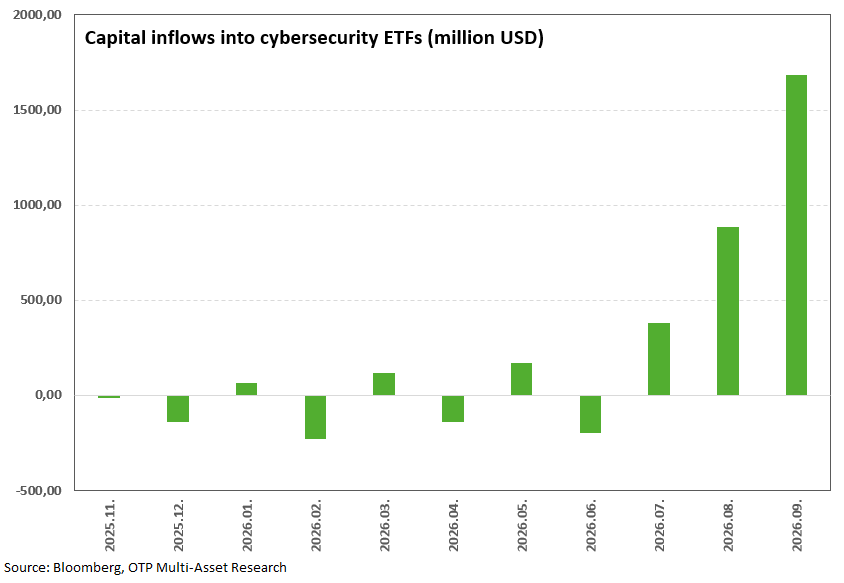
Anthropic’s Mythos model marked a turning point for the cybersecurity sector after companies realized they were ill-prepared, from a cybersecurity perspective, to face the new challenges posed by AI. The AI security concerns that have surfaced in recent months may further reinforce this trend, as the precautions needed to monitor and control these models could also contribute to an increase in security spending. These positive developments are reflected not only in improved investor sentiment but also in rising revenue and profit expectations, which attracted significant capital inflows into the sector in the third quarter. These trends are likely to persist in the coming quarters.
The year got off to a rough start for the software sector after the rapid development of Anthropic’s AI models amplified fears that artificial intelligence could eventually replace some or even all of the services offered by numerous software companies. Investors initially did not differentiate between software companies, so all players came under pressure, creating a favorable entry opportunity in the cybersecurity industry—which is structurally more protected and considered one of the main beneficiaries of current trends. The sector was already included among our favorite investment stories in our 2026 Investment Outlook, published last December, but the real breakthrough for the sector came in April, when Anthropic unveiled the Mythos Preview model, which achieved outstanding results in vulnerability detection capabilities related to enterprise IT systems.
Mythos possessed such advanced capabilities that Anthropic did not initially make it widely available; instead, it granted access exclusively to select organizations so they could assess vulnerabilities in their systems. Several leading cybersecurity companies participated in the initiative, known as Project Glasswing. The model uncovered numerous vulnerabilities in browsers, operating systems, and other software, highlighting that many companies’ cybersecurity preparedness is insufficient to meet the challenges of the AI era, which may prompt market players to increase their cybersecurity spending.
According to Jamie Dimon, CEO of JPMorgan, global cybersecurity risks have increased tenfold since the release of Mythos. This development has set the cybersecurity sector apart from the broader software industry, and stocks in this segment have nearly doubled over the past six months.
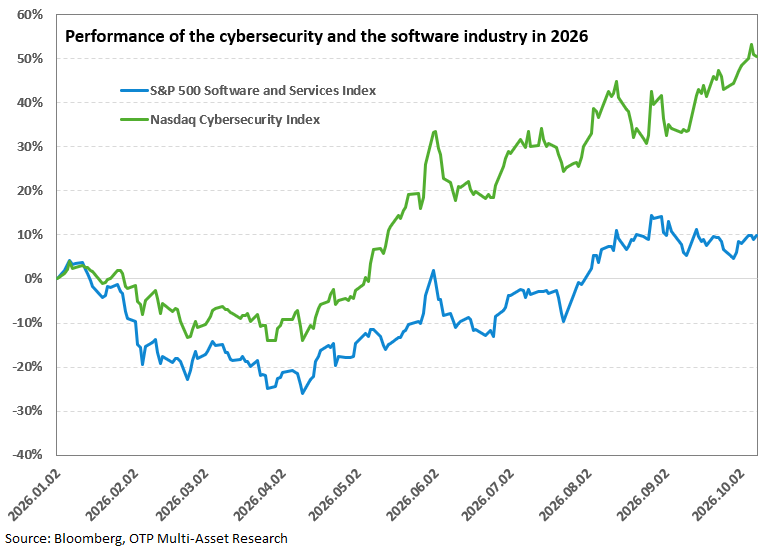
The emergence of AI-related security risks, which have intensified over the past month, could serve as a further catalyst for the industry. If companies place an increasing emphasis on controlling, monitoring, and protecting AI systems, cybersecurity firms could become direct beneficiaries of the spread of artificial intelligence and AI agents. Demand for advanced monitoring, authentication, and security solutions may rise, supporting revenue growth in the industry.
Following previous cybersecurity incidents, there was typically no significant positive market reaction in the segment’s stocks in the short term (<1 month); in contrast, over the past month, the stocks of industry players have risen by nearly 25%. This may indicate that, in addition to the favorable news, the market has already begun to price in improved earnings expectations. This represents a significant difference compared to the rest of the software sector, where — following the decline at the beginning of the year — there has been a rebound thanks to short-covering, but this has not been accompanied by any meaningful improvement in fundamentals.
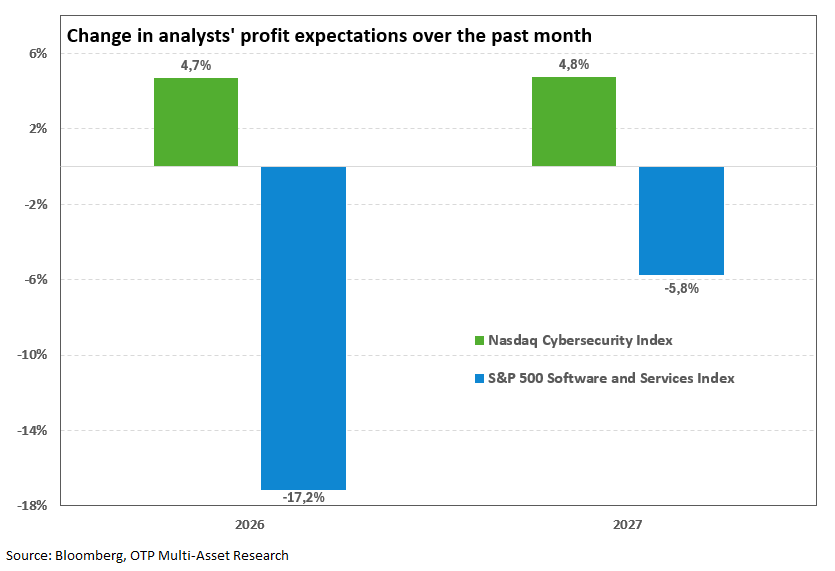
The lion's share of corporate IT spending may continue to be directed toward AI-related products and services, while cybersecurity spending may also rise due to increasing security risks. As a result, resources allocated to traditional software services may become scarcer, which could continue to put pressure on these companies’ stocks relative to those of cybersecurity firms.
The share prices of the latter are also being supported by significant capital inflows: while $220 million flowed out of ETFs tracking cybersecurity companies in the first half of the year, net inflows of nearly $3 billion were observed in the third quarter. This spurred broad-based buying in the sector and contributed to a widespread rally, as a result of which, by the end of September, the shares of 84% of industry players were trading above their 200-day moving average.
Despite rising bond yields, technology trends offering higher growth (such as cybersecurity) have outperformed the broader stock market, suggesting that strong fundamentals and unique growth catalysts can offset interest rate sensitivity. This trend may continue in the future, provided that cybersecurity companies can maintain their accelerating revenue and profit growth in their earnings reports.
In our view, we are still in the early stages of AI adoption, as AI agents have only begun to gain wider traction this year, and the security risks associated with autonomous systems have only come into the spotlight in recent months. Although the revaluation following the unveiling of the Mythos model has already taken place in the industry’s stocks, it is quite conceivable that the surge in demand for AI security solutions is only just beginning, which could support further increases in stock prices through additional positive revenue and EPS revisions in the coming quarters. For this reason, cybersecurity remains among our favorite investment topics.
Get more out of your investments!
Global Markets Services
OTP Global Markets offers a broad range of services in the field of local and international money and capital markets.
Read morePrivate Banking Services
Personal care and expertise with OTP Private Banking, along with the knowledge, security, and innovations of a multinational banking group.
Read more