
Investment Outlook 2026
Related content
US bank shares fell
The third-quarter earnings season in the US has picked up pace following the release of the latest figures from US banks. Based on preliminary expectations, the third quarter is likely to have closed with strong earnings growth for S&P 500 companies, led by the energy and technology sectors. The major US banks have still achieved solid growth on an annual basis, indicating that their operations remain strong, but the pace has clearly slowed in many cases, which has tended to result in negative share price reactions.
Commodities - Technical Analysis
Gold and silver continued their downward trend, bouncing off key levels. Until their downward trends are broken, they will not be able to produce a significant rise. The fall in oil prices reversed from the $87.5 level and began a slight upward movement. Natural gas remained in an uptrend; a significant rise could even occur if it breaks out upwards. The price of copper has become stuck in a wider range, so the oversold and overbought zones may offer more favourable trading opportunities. The falling prices of wheat and corn have reached key support levels; a buying reaction from these levels could present favourable long opportunities with limited risk.
Consumption and AI related investments saved the year in the US with 2% GDP growth, and despite the trade war and shutdown the outlook remained solid. Fiscal and monetary easing continues to provide strong tailwinds, but equities are expensive, meaning there is less and less room for error. We are therefore keep some powder dry, to increase equity exposure in case of drawdowns, and selectively choosing between sectors and regions for excess returns. Within Europe, we see potential in the cheapest small-cap segment, several factors could catalyze its outperformance in addition to the German stimulus.
Macro
Consumption and AI related investments saved the year in the US with 2% GDP growth, and despite the trade war and shutdown the outlook remained solid. Recession risk is low, but the weakening labor market, high and fast rising debt, halted disinflation above CB’s target, and political pressure on the Fed remain a cause for concern. Looser fiscal policy in the EU could add to GDP growth in 2026-2027, but debt sustainability issues can not be neglected. Inflation is at target levels, but risks are more tilted to the upside. In the short run we expect the market to price in more cuts as the new FED chair is getting closer, which will moderate long bond yields. In Europe, we still expect term premiums to rise. From the current level, we do not expect further meaningful HUF appreciation, but holding long positions remains to be attractive due to high interest rate differential.
Equities
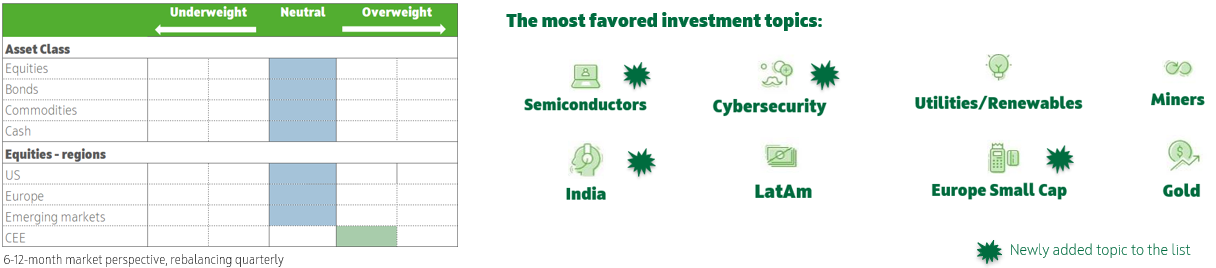
Fiscal and monetary easing continues to provide strong tailwinds, but equities are expensive, meaning there is less and less room for error. We are therefore keep some powder dry, to increase equity exposure in case of drawdowns, and selectively choosing between sectors and regions for excess returns. In the US, we favor sectors primarily linked to the development of AI infrastructure, like semis on the hardware and cybersecurity on the software, utilities/renewables on the energy supply side. Within Europe, we see potential in the cheapest small-cap segment, several factors could catalyze its outperformance in addition to the German stimulus. The weakening dollar and Fed interest rate cuts are tailwinds for EM, but valuation is already neutral, so we prefer the cheapest Brazil and the nearshoring driven Mexico. After a long consolidation, we would also start building positions in the structural megatrends driven India. We see no change in the factors driving CEE so far, depressed valuations compensate for higher risks.
Bonds
While the weakening labor market and slowing growth are pushing yields lower, continued significant budget deficits and deteriorating debt trajectories pose risks in the opposite direction. For this reason, we continue to favor the short/medium end of the yield curve. Corporate bonds’ historically tight spreads do not cover the increasing risks.
Commodities
We maintain an overall neutral view on commodities, as energy and agricultural products remain weak for now. However, the outlook for industrial and precious metals remains favorable, so selective exposure is recommended. We like copper, uranium, and gold related exposures.
Get more out of your investments!
Global Markets Services
OTP Global Markets offers a broad range of services in the field of local and international money and capital markets.
Read morePrivate Banking Services
Personal care and expertise with OTP Private Banking, along with the knowledge, security, and innovations of a multinational banking group.
Read more