
One of the world's largest sugar producer is at a turning point
Related content
Meta: Burning Cash on the AI Promise
Overall, Meta’s quarterly performance continues to paint a positive picture in terms of the underlying fundamentals, while the company has also achieved significant milestones on the AI model development front. However, elevated spending is taking a substantial bite out of cash generation, with free cash flow now turning negative, which may increasingly require funding through capital market financing. Following the stock’s rally in recent weeks, valuation levels have also moved higher. In the near term, these factors may continue to put pressure on the stock, although the longer-term outlook remains constructive. Naturally, much will depend on the company’s ability to effectively monetize its investment program over time.
The government plans a 4.9% deficit for next year
The government plans a 4.9% deficit for next year and will gradually reach 2.8% by 2030, under the Maastricht criteria
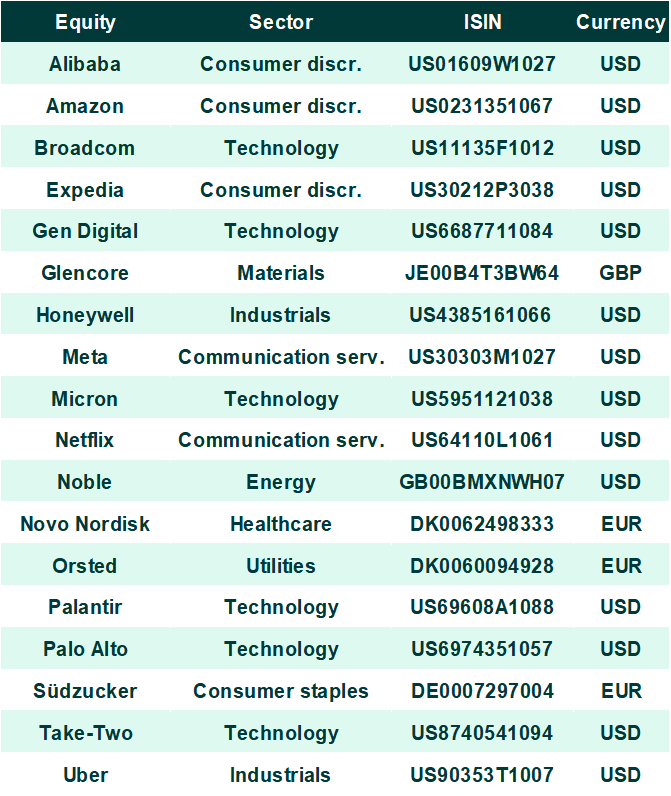
We have previously sent a Trading Idea regarding the shares of Südzucker, a German company, which is one of the world’s largest sugar producers and a leading European player in biofuel production. We are now adding the company to our Equity Top Pick List as well, as we continue to expect a turnaround in its financial performance. The ethanol production business was already strong in Q1, and the outlook remains favorable, as energy prices remain relatively higher due to the protracted conflict in Iran, which could keep biofuel prices higher as well. In addition, the conflict in the Middle East could indirectly drive up prices for agricultural products including sugar over time and this might be further exacerbated by this year’s extreme weather conditions. As a result, profitability of the German company’s sugar production division, which has struggled in recent years, could improve significantly.
Diversified business model
Südzucker is a German company (ISIN: DE0007297004) engaged in agricultural and food industry activities. It is one of the world’s largest sugar producers and Europe’s leading ethanol (biofuel) producer, for which we recently sent a Trading Idea as well. The company has more than 18 thousand employees and divides its operations into five different segments:
- Sugar production: this includes the processing of sugar beets (with less emphasis on cultivation), sugar refining and the sale of various products, ranging from crystalline sugar to liquid sugar and caramels.
- Special products: this includes frozen and refrigerated pizzas, pasta dishes, and other packaged products (one of the world’s largest pizza manufacturers).
- CropEnergies: this essentially covers ethanol production (mostly biofuel) and animal feed production.
- Starch: the main activity here is the production and sale of starch (from corn, potatoes, and wheat).
- Fruits: this one includes a large variety of fruit products and concentrates.
Südzucker also holds a 41.9% stake (directly and indirectly) in AGRANA, which is engaged in similar activities (sugar production, starch production, fruit products, bioethanol etc.). Most of these are consolidated in the financial statements.
Strong cyclical performance
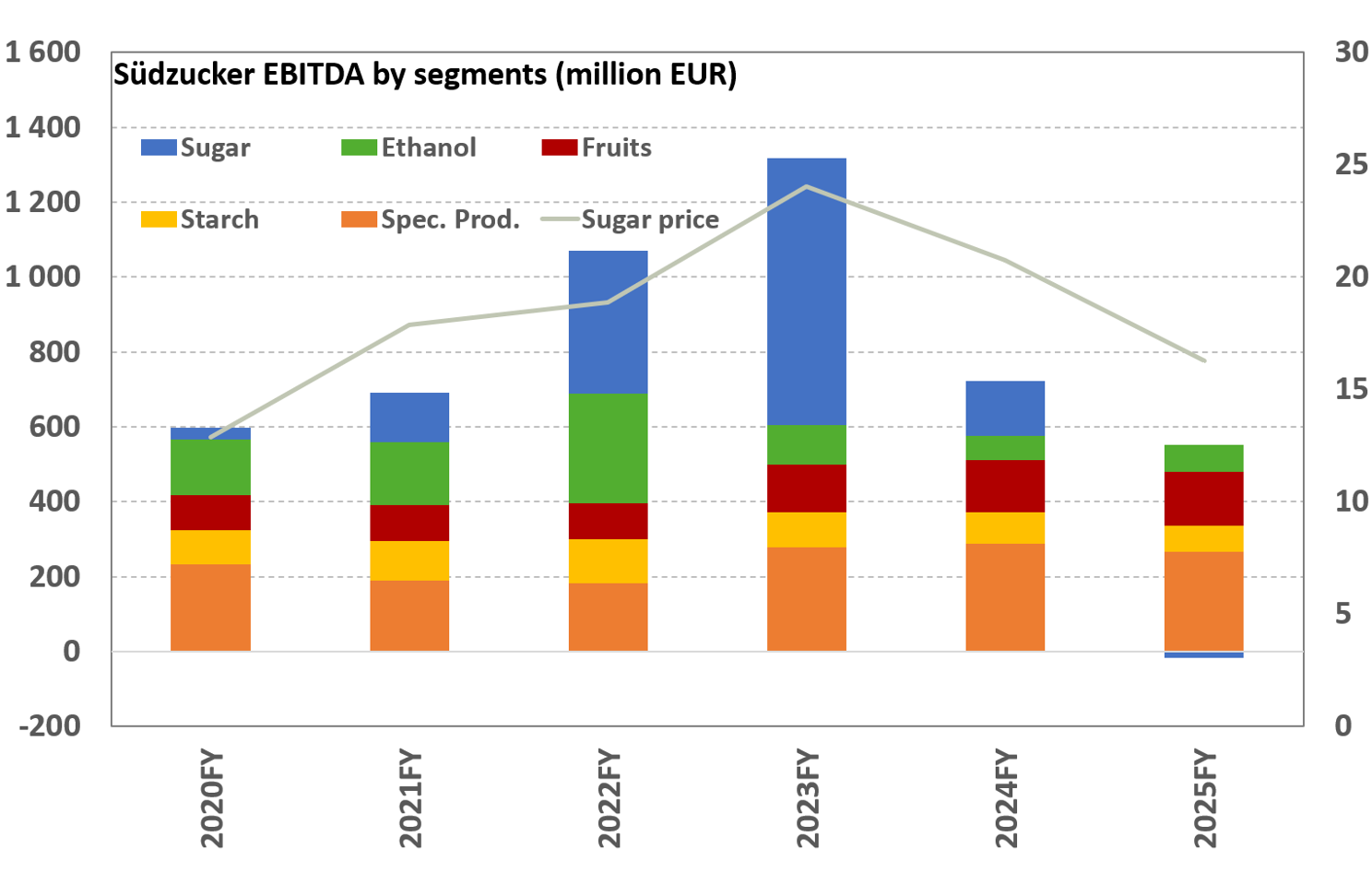
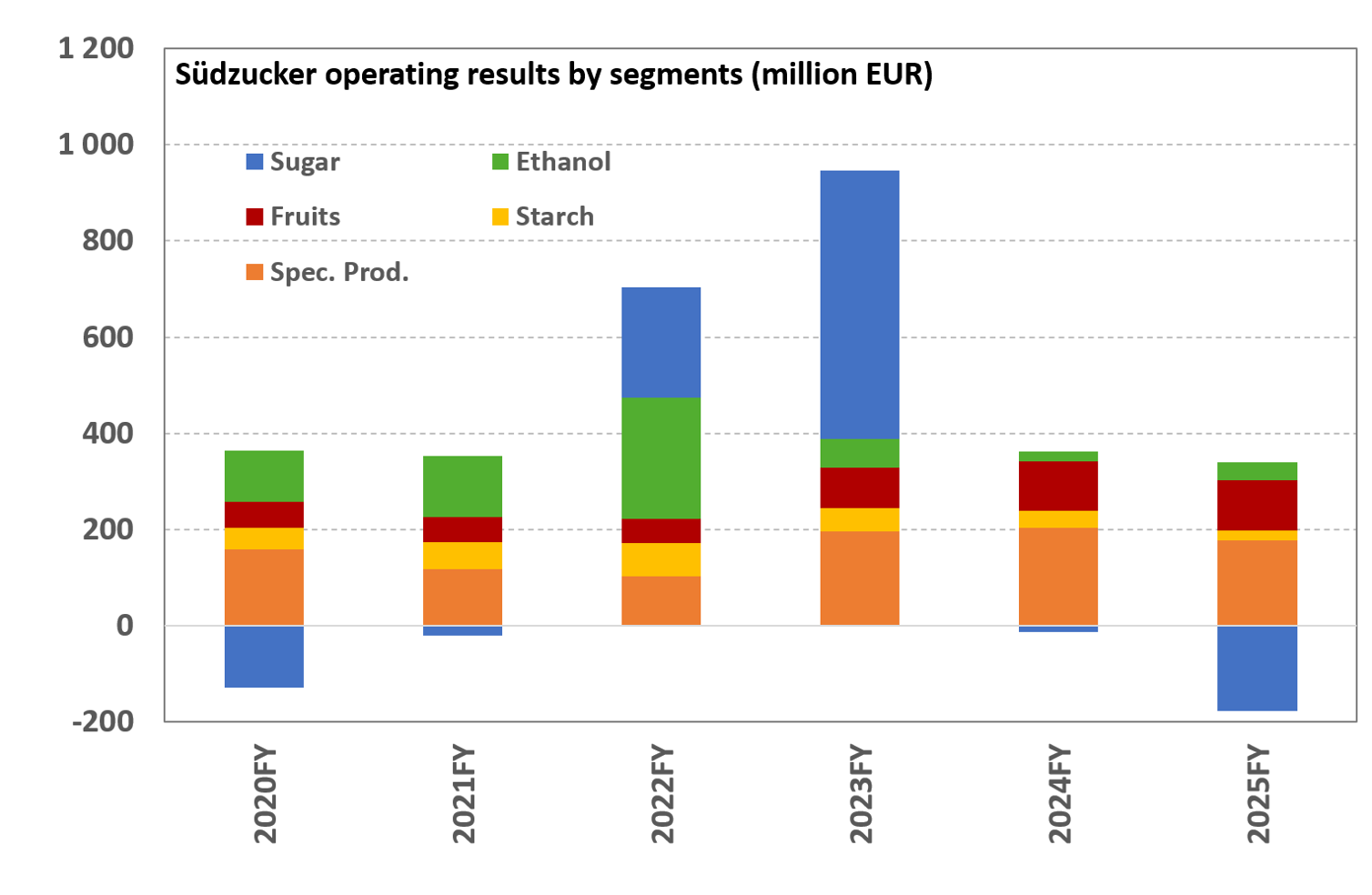
The company’s last fiscal year (March 2025–February 2026) was not particularly strong, primarily due to challenging conditions in the sugar market. Group-level EBITDA was 535 million euros, with special products accounting for 50% of that figure and fruit products for 30%. The starch and ethanol production segments each contributed 13%, while the sugar segment posted negative EBITDA (-17 million EUR). A similar trend can be observed at the operating profit level, where all segments posted a profit except for the sugar division (-177 million EUR).
Source: Südzucker, OTP Multi-Asset Strategies
Source: Südzucker, OTP Multi-Asset Strategies
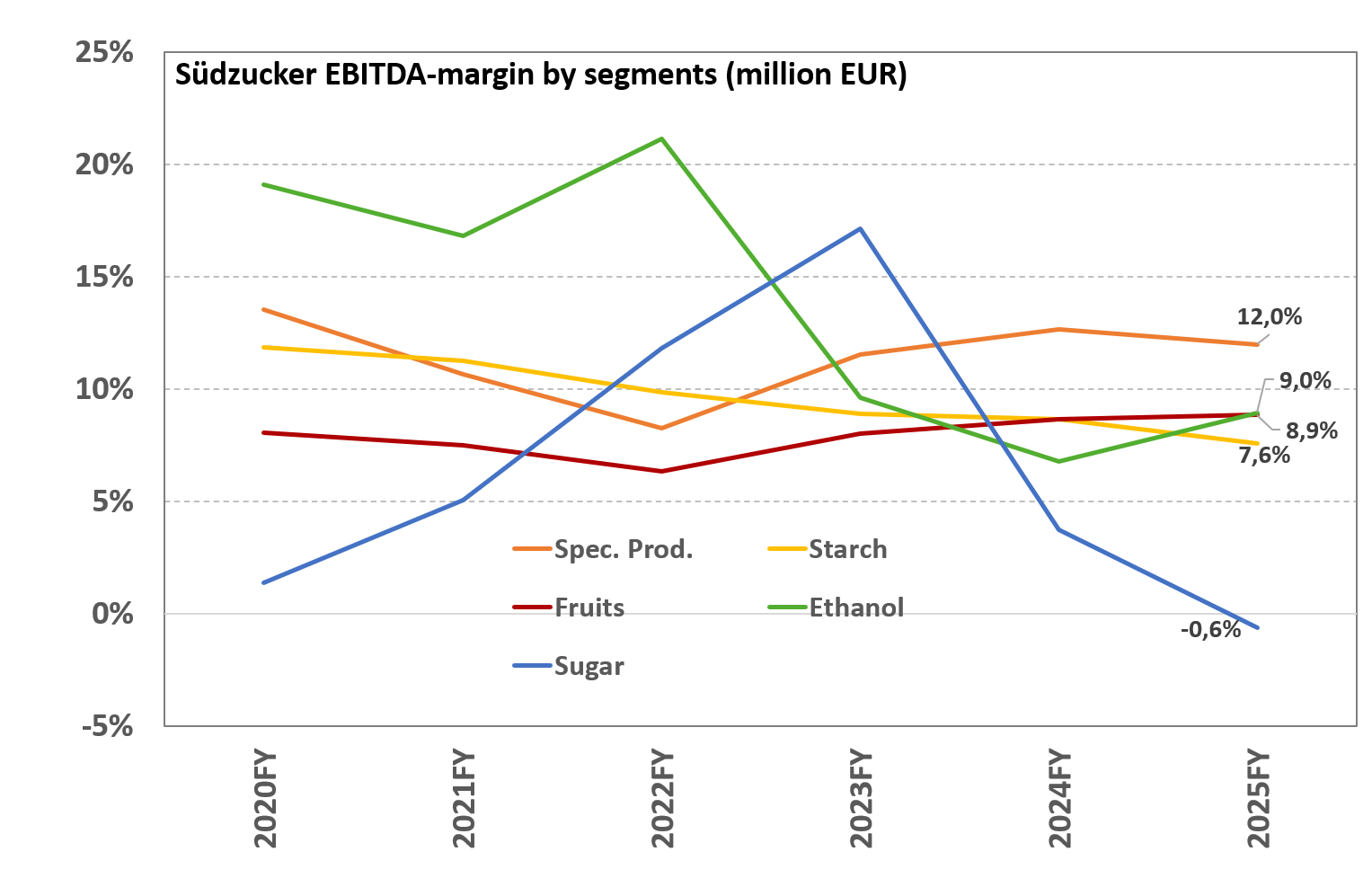
Over a longer time horizon, however, a clear cyclical pattern can be observed in the Group’s financial performance. The special products, starch, and fruit divisions have generally delivered stable EBITDA of 400–500 million euros in recent years, while earnings from ethanol and sugar production have been characterized by much greater fluctuations. EBITDA from ethanol production ranged between 65-300 million euros, while for sugar between -17-714 million euros over 2020-2025. The performance of these segments therefore has a significant impact on group-level results as well.
It is worth considering, for example, that at higher sugar prices, the sugar production segment’s 2023 EBITDA of 714 million euros was, on its own, greater than what the entire company generated last year. On average over the past six years, the company generated ~822 million euros in EBITDA annually.
Source: Südzucker, OTP Multi-Asset Strategies
Südzucker published its Q1 earnings report in July, which was relatively strong. Although group-level revenue declined by 4.4% year-over-year, EBITDA nevertheless improved by more than 40% (from 96 to 135 million euros). This is due to the fact that losses in the sugar division decreased, while ethanol production performed exceptionally well (largely due to soaring energy prices caused by the war in Iran), and the starch division also performed well (with the special products and fruit segments delivering stable results).
Management expects revenue of 8.1–8.5 billion euros this year (roughly stable year-over-year) and EBITDA of 480–680 million euros (+8.4% YoY on a midpoint basis). However, in our view, the outlook has improved, as energy prices have surged significantly again following the decline in June, which has a direct positive impact on the performance of the ethanol production segment, and the effects of the conflict in the Middle East may eventually spill over into sugar prices as well (these are currently still at multi-year lows).
Südzucker has a stable management team and ownership structure. The South German Sugar Beet Processing Cooperative (an investment company of German sugar beet growers) holds a 65% stake in the company, while an additional 10.2% is owned by the Austrian-based Zucker Invest GmbH (the remaining ~25% is free float).
Why might the sugar producer be interesting in the longer term?
Based on the data above, it is evident that the company’s financial performance is heavily dependent on the results of the sugar and ethanol segments, which typically exhibit cyclical behavior, so the outlook for these segments is a key factor in determining both the stock price and the company’s valuation.
The Q1 financial results show that the company’s ethanol production division has already outperformed expectations. The segment’s Q1 EBITDA was 24 million euros, compared with 4 million euros last year (despite a 5.3% decline in revenue due to scheduled maintenance work). The outlook here remains favorable, as oil prices have surged again due to the protracted conflict in the Middle East, which could also keep biofuel prices higher.
At the same time, the prices of grains used as input materials (e.g., wheat, corn) have risen somewhat, though not yet to a drastic extent. In addition, the proposal in the EU to raise the ethanol blending ratio in gasoline from 10% to 20% could provide a longer-term tailwind, though we do not expect any rapid changes in this regard.
However, the sugar production business continues to struggle, but we expect to see changes here as well over time. On the one hand, the higher demand for and prices of ethanol are diverting a portion of sugarcane crops, leaving less for sugar production (a significant portion of biofuels are sugarcane based). This is already reflected in production figures in Brazil, which is the world’s largest sugar producer (according to a report by the Brazilian Sugarcane and Bioenergy Industry Association, sugar production fell by 2%, while ethanol production surged). This year, the sugar market is expected to show a slight overall deficit (~192.6 million tons of production and ~194.1 million tons of consumption). Similar forecasts can be seen for the EU sugar market as well (slight deficit even after adjusting with net imports).
On the other hand, the stronger El Nino weather phenomenon expected this year could also cause production issues, as more severe droughts and lower rainfalls are anticipated in some regions (of course, net effects are difficult to assess). In India, for example, this June was the fifth driest since 1901, and rainfall was nearly 40% below the long-term average (this improved in July, but the deficit still stands at 13%). This is significant because the country is the world’s second-largest sugar producer.
Third, sugar prices remain at multi-year lows, so even minor positive developments could push prices higher. In addition, the protracted war in Iran could have a positive impact on sugar prices due to the (lack of) availability and cost of fertilizer products, as well as higher fuel prices. From Südzucker’s perspective, however, this is a mixed bag (along with higher sugar prices, sugar beet prices and processing costs may also rise).
Valuation and debt
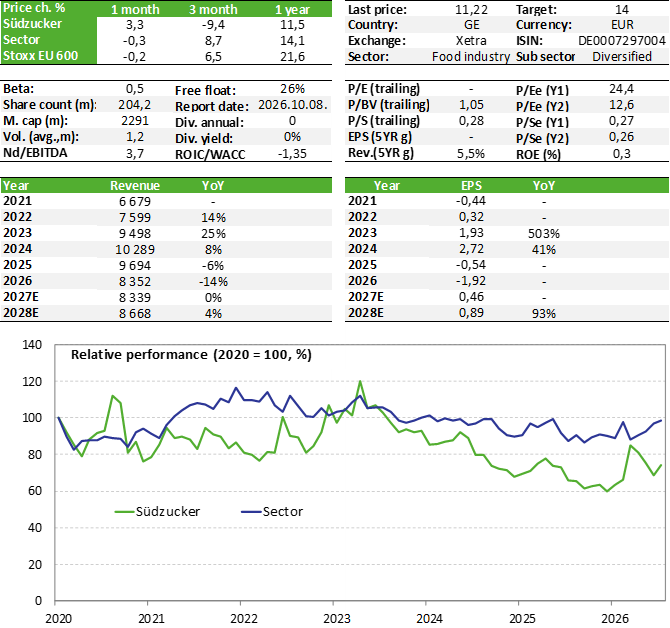
The company’s valuation on an EV/EBITDA basis is not high as based on the midpoint of the expected EBITDA range for this year (~580 million EUR), the multiple stands at ~7.3x. Although the P/E ratio may seem high, but for cyclical companies this is typically highest around the bottom of the cycle, so we consider this less relevant in this case.
The net debt of 1.85 billion euros is not low (~3.2x net debt / EBITDA, calculated with the midpoint of this year’s expected figure). However, the company’s liquidity position is strong: in addition to 232 million euros in cash, significant undrawn credit lines are available if needed (~1.5 billion euros). Furthermore, the maturity profile of the debt is favorable (most of the larger maturities are due after 2030). Südzucker's credit risk rating is still "investment grade,", but it is at the bottom of the range with a negative outlook (could be a potential source of risk).
Source: Bloomberg, OTP Multi-Asset Strategies
Equity Top Pick List (updated)
Get more out of your investments!
Global Markets Services
OTP Global Markets offers a broad range of services in the field of local and international money and capital markets.
Read morePrivate Banking Services
Personal care and expertise with OTP Private Banking, along with the knowledge, security, and innovations of a multinational banking group.
Read more