
After a hot fall, a spring tornado could wreak havoc in France
Related content
German Healthcare Giant Shows Signs of a Comeback.
European markets seemed to be struggling in recent weeks, but following the declines, patterns suggesting a correction have emerged on the indices, with an increasing number of stocks signaling a possible turnaround. However, the technical charts of the companies on the list still do not reflect clear trading opportunities. For this reason, this week we are analyzing one stock from the momentum list: Siemens Healthineers. The company is part of the Siemens Group and is one of the world’s leading manufacturers of medical devices.
Hungarian Equities - Technical Analysis
The BUX index broke out of its uptrend last week and underwent a sharp correction, which may be followed by some retesting. MOL’s share price found minor support but is still in a correction. Richter stalled at the 12,180 level, but a bullish day signaling a reversal has not yet occurred. Magyar Telekom’s share price remains narrow, a day with a strong move could provide short-term direction. Opus is still in a downtrend; a reversal is still pending. Rába continued to trade within a narrow range; another upward wave could follow later if conditions are right.
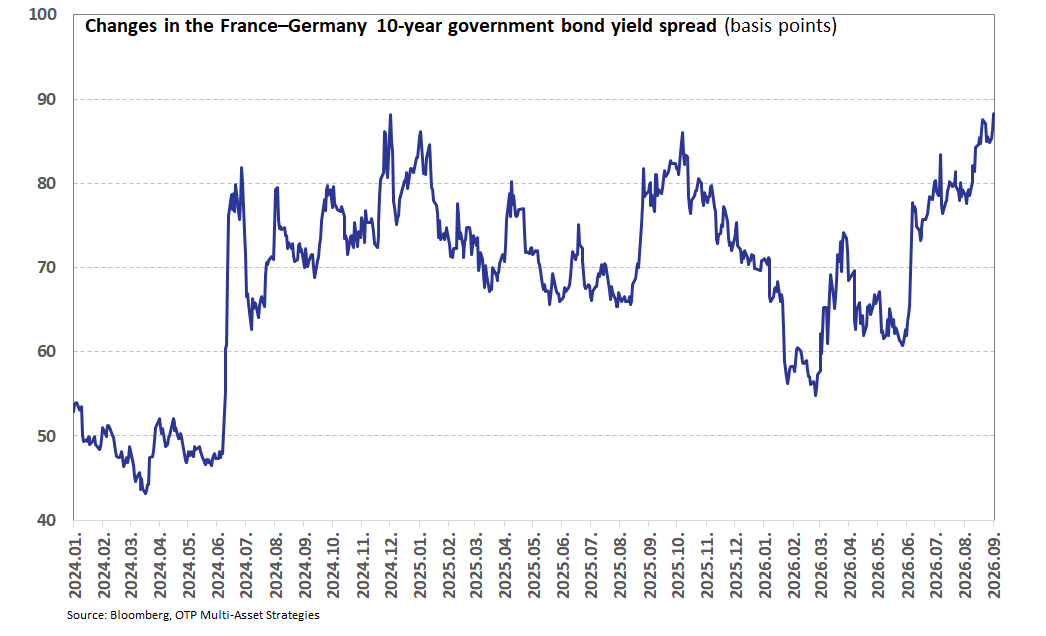
Barely half a year after this year’s French budget was passed, the wrangling over the 2027 budget is about to begin, but that’s not all, because France will also hold a presidential election next spring. During the first public presidential debate, some of the radical candidates put forward ideas that were, at times, unconventional. Although the presidential election in late April still seems far off, based on the latest polls, if no candidate secures enough votes and a runoff is held, it cannot be ruled out that two radical presidential candidates will face off against each other. Market participants may have begun to price in this growing uncertainty, as the yield spread between French and German 10-year government bonds has started to widen again in recent weeks. The period ahead promises to be full of twists and turns, so it will be worth keeping a close eye on developments in French domestic politics.
Political uncertainty is on the rise again
In recent years, the domestic political crisis in France has seemed to become almost a permanent feature: an early election, a succession of prime ministers, and constant wrangling over current budgets. We previously wrote here in detail about the twists and turns surrounding the passage of this year’s French budget. Barely half a year has passed, and investor concerns about France have begun to mount again, as France prepares for the 2027 presidential election even as the submission of next year’s draft budget is fast approaching.
According to the Constitution, the French president may serve no more than two consecutive terms, so Emmanuel Macron will not be able to run in 2027. (It is worth noting that Macron was the fourth president to be re-elected for a second term, following Charles de Gaulle, Francois Mitterrand, and Jacques Chirac.) The date for the first round of the presidential election was recently set for April 18 (to be followed by a potential second round in early May).
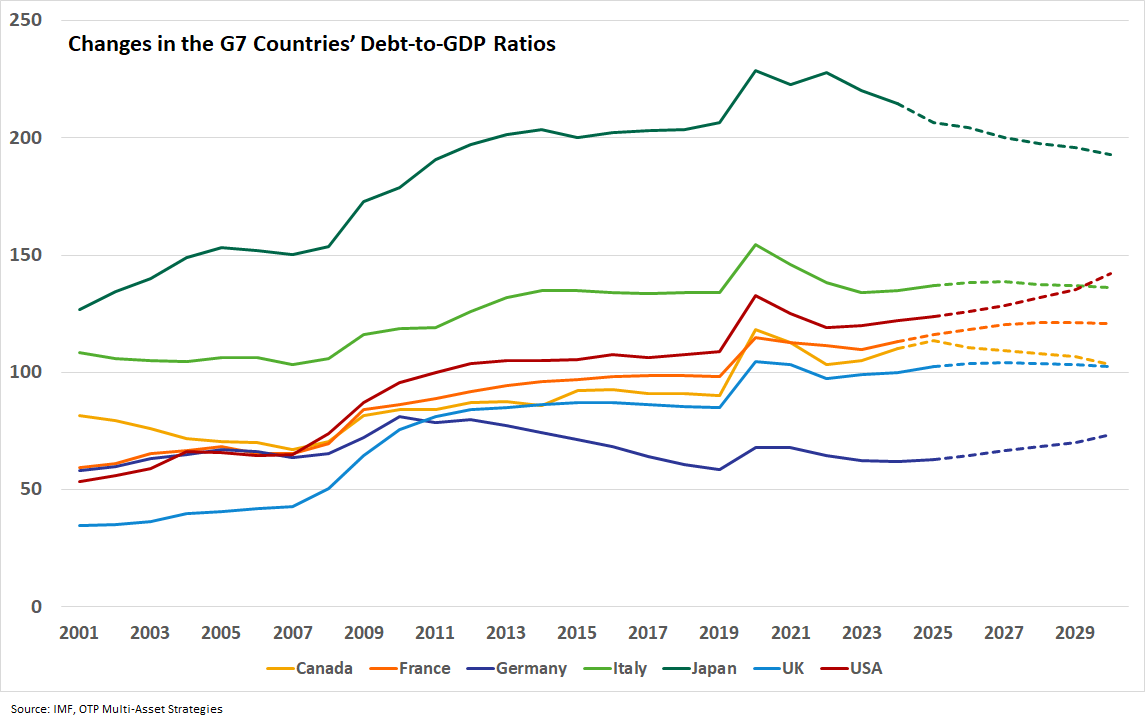
The new French president will not have an easy task: according to estimates from an analysis commissioned by the French Ministry of Finance, a total of 126 billion euros in budget cuts would be needed to stabilize the public debt-to-GDP ratio during the next presidential term, which runs through 2032. For the remainder of the decade, France’s fiscal position would deteriorate significantly if spending is not curbed; in the absence of measures, the budget deficit could rise to 7 percent by 2030 (up from the 5 percent projected for this year), while public debt as a percentage of GDP could rise to more than 130% by the end of the decade. The IMF also projects a rising trajectory for French debt in the coming years, although it currently forecasts a public debt-to-GDP ratio of approximately 120% by 2030.
It won't be easy to get the budget passed
However, the 2027 budget must also be finalized before the presidential election, which could pose even greater challenges for the French government than in recent years. The draft budget bill for the coming year must be submitted to Parliament by early October; if the minority government fails to secure its passage through a parliamentary vote, it may attempt to push it through via a constitutional procedure, but in response, the opposition parties are likely to counter with a motion of no confidence. It remains to be seen to what extent the parties will be willing to compromise as they turn their attention to the presidential election, and whether Prime Minister Sébastien Lecornu will once again be able to maneuver so that, in exchange for making certain concessions to the parties, his government survives one (or more) no-confidence votes.
France, which is subject to the EU’s excessive deficit procedure, must reach a deficit target of 3 percent of GDP by 2029; the government is aiming for a 5 percent budget deficit this year, but achieving this does not look easy either. The prime minister’s room for maneuver is limited, and he recently ruled out spending cuts in social housing among other things (and it is also unclear what will happen to the tax previously imposed on large corporations) and would seek to reduce social spending in other ways. Some opposition parties have already indicated that they will not support the budget.
According to a French regulatory agency, if the next annual budget is not passed before the presidential election, it could result in an increase in the budget deficit of ~0.5%. If the previously approved budget were to be temporarily rolled over into the next year, the government would be unable to impose new taxes or cut social spending. Concerns about the long-term viability of the state would heighten investor uncertainty and could also increase the cost of financing the national debt.
The presidential election is also approaching
In addition to launching budget negotiations, France is also turning its attention to the 2027 presidential election. The first joint debate among the French presidential candidates took place in late August, where seven participating candidates at least agreed that the French budget deficit must be reduced as soon as possible. However, their positions differed significantly on exactly how this should be achieved.
Far-left candidate Jean-Luc Mélenchon has put forward the unorthodox proposal to cancel France’s debt to the Bank of France. Marine Le Pen (who was recently convicted of embezzling public funds but will still be able to run in the presidential election) aims to achieve savings of more than 100 billion euros by cutting back on government functions and potentially reducing France’s contributions to the European Union.
Le Pen, however, would ensure that France honors its debts and would also restore the retirement age to 62 (or 60 in some cases). In France, the retirement age is currently 62, and the prime minister was most recently able to get the budget passed by parliament only by postponing the implementation of the unpopular pension reform until after the 2027 presidential election (which includes a gradual increase in the retirement age from 62 to 64), in exchange for which the Socialists did not support the no-confidence motions filed against the prime minister.
According to the latest polls, Marine Le Pen is in the lead, with a tight race among the other presidential candidates behind her; in addition to the far-left candidate (Jean-Luc Mélenchon), two former prime ministers, Gabriel Attal and Édouard Philippe, will also be running. Although much could still change before the first round in April, commentators suggest that if the centrist candidates ultimately rally behind a single candidate, there is a chance that a center-right politician could advance to the second round.
According to surveys conducted in late August, if Édouard Philippe were to run alone, he would have a chance of advancing to the second round ahead of Mélenchon, whereas if Philippe and Attal were to run together, Mélenchon’s chances currently appear better. Édouard Philippe is already working to unite center and right-wing forces in a new political party in order to prevent Marine Le Pen from coming to power.
What happens next?
It is also worth noting that, regardless of who wins the presidential election, that person would be unlikely to have a majority in parliament, which would significantly hinder the implementation of the president’s agenda. Thus, although the next parliamentary elections are theoretically not due until 2029, for this very reason it cannot be ruled out that parliamentary elections might follow the presidential election.
Marine Le Pen would finance her plan to lower the retirement age through a 125-billion-euro savings plan; the exact details are not yet known, but she would achieve this in part by reducing “unnecessary” government agencies and cutting France’s contribution to the EU, among other measures. Mélenchon would significantly reduce state subsidies to companies and impose taxes on the wealthy. He has also proposed canceling 18 percent of France’s national debt currently held by the Bank of France.
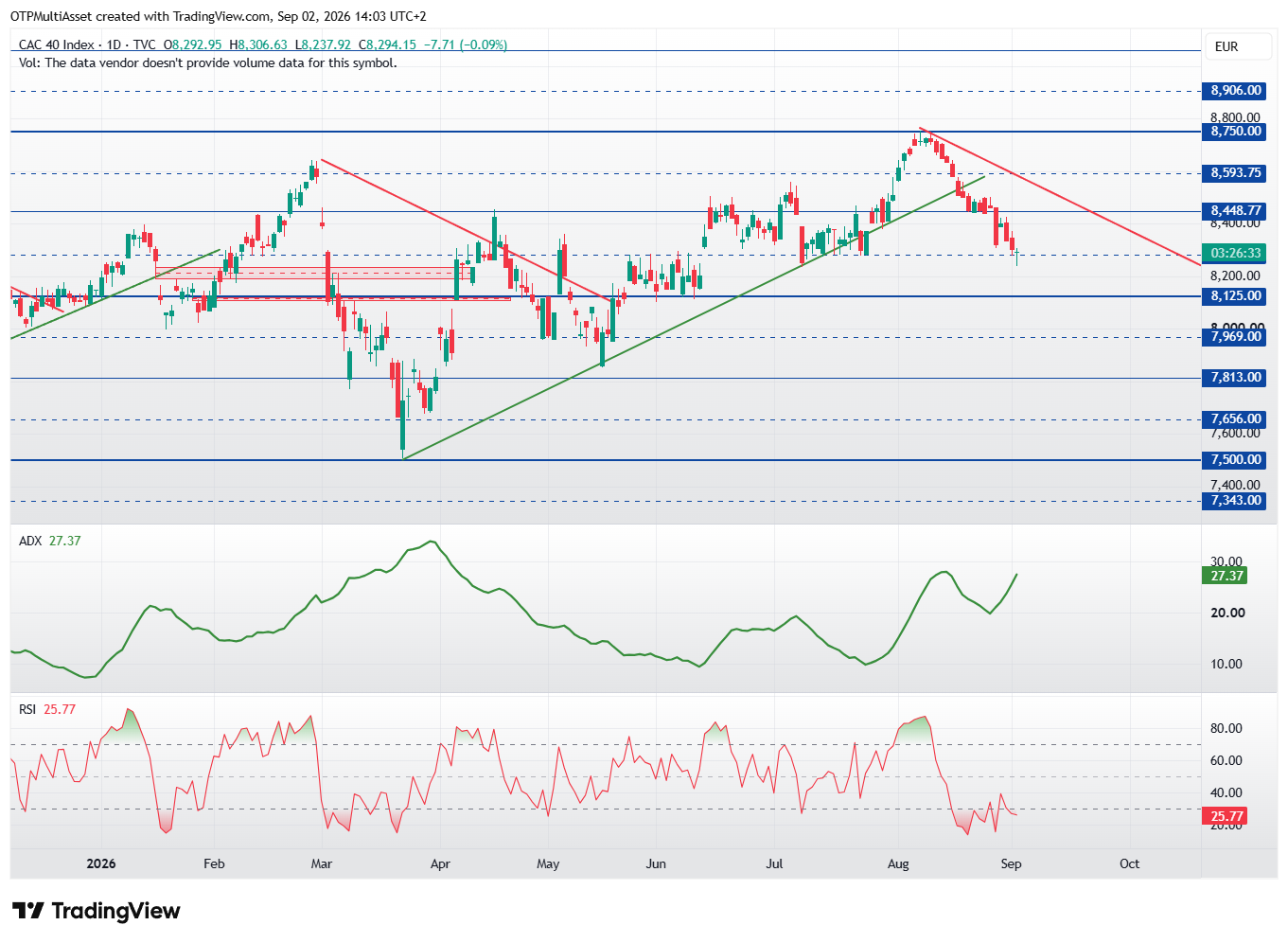
Amid the presidential candidates’ economic policy plans that deviate from the mainstream and growing domestic political uncertainty, the French CAC 40 index also fell sharply at the end of August, and French bank stocks were hit as well, after market participants began to price in domestic political risks. French banks hold a relatively small portion of the country’s debt, the majority of which is held by international investors. According to analysts, the risk stems not primarily from the banks’ exposure to government bonds, but rather from secondary effects such as higher refinancing costs and an economic slowdown.
For market participants, a runoff between Marine Le Pen and Jean-Luc Mélenchon could represent a higher-risk event, as neither candidate has experience in governing a country or managing complex budgets, and the prospect of the unconventional economic policies they have hinted at has further unsettled investor sentiment. Against the backdrop of rising global yields, it will be worth keeping an eye on the yield spread between French and German 10-year government bonds, which has begun to widen again in recent weeks.
Ahead of budget negotiations, the upcoming presidential election, and the parliamentary elections that may follow, investors are speculating on how the successor to the more market-friendly President Emmanuel Macron might address the challenges looming over France: a budget deficit of approximately 5%, rising costs of debt financing, and subdued economic growth. The increasing uncertainty in the months ahead is likely to leave its mark on the performance of French assets.
CAC40 technical picture
The index’s uptrend broke down more than two weeks ago. Previously, the break above the 8,125-point level marked an important turning point, so this level could now serve as support and may even become reachable during the current correction. The formation of another bullish wave still seems a long way off. A break above the thick red trendline would confirm the start of a new uptrend.
Get more out of your investments!
Global Markets Services
OTP Global Markets offers a broad range of services in the field of local and international money and capital markets.
Read morePrivate Banking Services
Personal care and expertise with OTP Private Banking, along with the knowledge, security, and innovations of a multinational banking group.
Read more