
Hungary: Inflation in August was 1.3% YoY much below the inflation target, but service inflation is still high
Related content
Promising technical setup in a german defense stock
Although European markets rebounded last week, they have started this week under renewed, significant selling pressure, which, for the time being, does not favour those looking to enter long positions. Based on momentum, the selling side currently still appears to be stronger. Nevertheless, amongst the shares, we would highlight Hensoldt, which presents a clear technical picture and offers a favourable entry opportunity. The company primarily develops radar systems and other electronic warfare solutions for military and security purposes.
Hungarian Equities - Technical Analysis
The BUX index has retested half of the downtrend; upside potential still appears limited, and a retest of another swing low is more likely. MOL’s share price has remained in a downtrend and could fall even lower than the most recent swing low of 4,844. Richter has also remained in a downtrend; more momentum is needed to break the trend. Only Magyar Telekom’s share price has broken out of its consolidation range and given a clear buy signal. Opus is still in a downtrend; a reversal is not yet in sight. Rába continued to trade within its consolidation range; another upward wave could follow later, provided the right conditions are met.
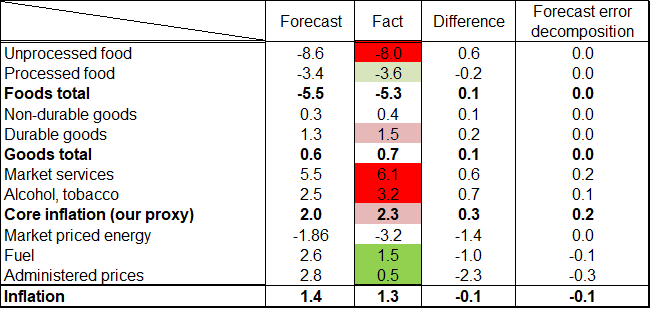
Hungary's headline inflation increased to 1.3% year-on-year in August from 1.2% in July. The published data was lower than the consensus and our forecast (both 1.4%). The lower-than-expected inflation was due to above expectation core inflation but lower than expected fuel inflation and lower increase of administered prices.
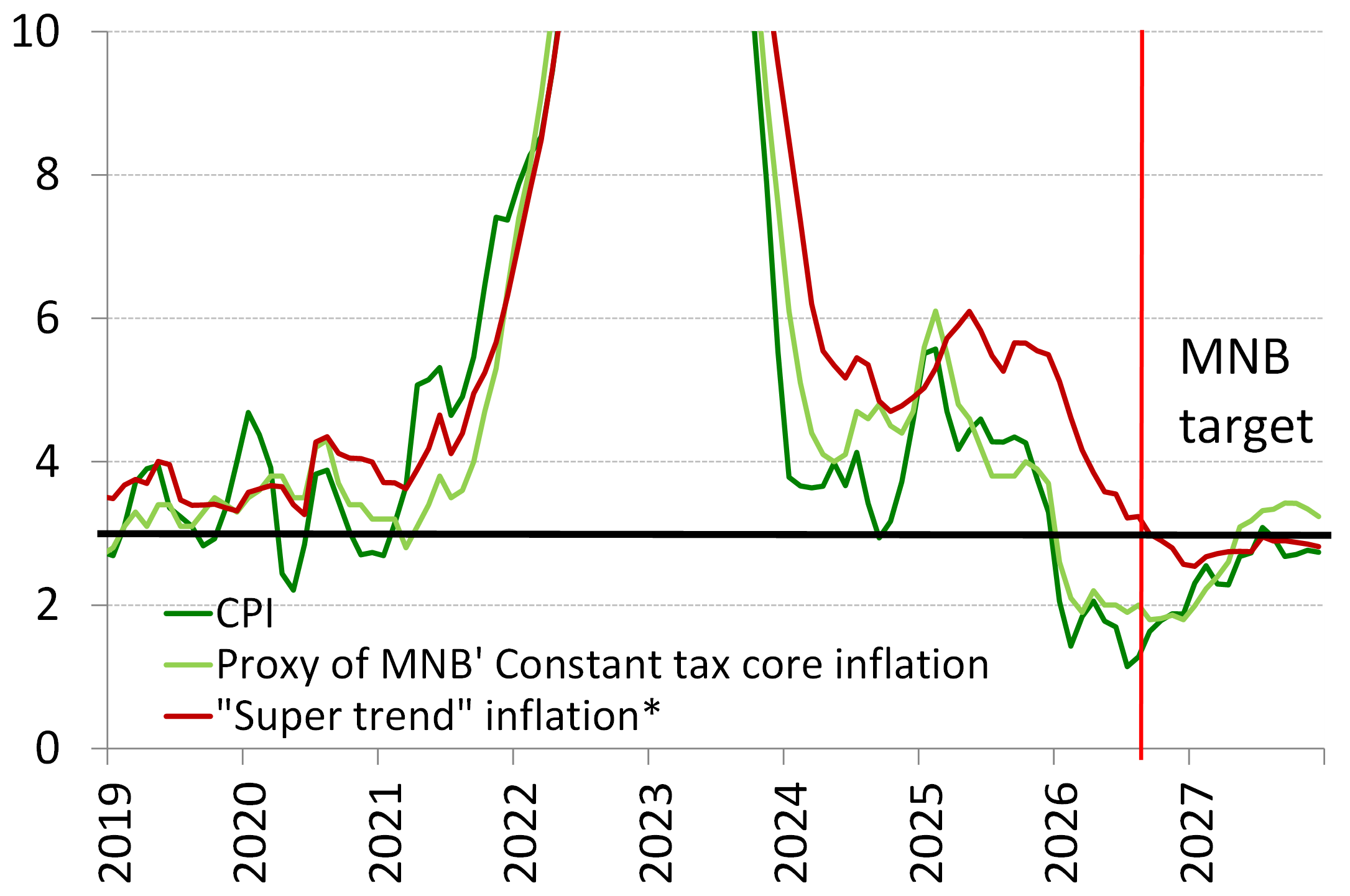
While the headline number increased less than expected, underlying indicators showed a slight increase on a YoY basis instead of the decline expected by us. The MNB’s constant-tax core inflation rose from 1.9% to 2.0% YoY, while sticky-price inflation stagnated at 3.8% YoY. The core inflation indicator excluding processed foods rose from 3.1% to 3.3% YoY. Our “supertrend” inflation indicator (Chart 9), which is similar to the aforementioned MNB indicators but does not contain the mainly backward-looking pricing of telecommunication and financial services and is filtered for the effects of the margin cap (therefore it is not affected by any administrative measures), increased significantly from 0.5% to 3.6% on an annualized MoM basis, following a significant decline last month due to very low goods inflation in July.
In case of core inflation, the most significant negative surprise came from market services. There are two reasons for this: first, larger-than-expected part of the inflation-indexed fee hikes remained for August in the financial sector, following the voluntary price freezes in the telecommunication and financial services sectors ended at the end of June. Second, transport service inflation was also higher which is sensitive for diesel prices. But the big picture is that the annualized MoM rate of service inflation w/o backward-looking pricing items is still 6% which needs to be lower to reach the inflation target in a more sustainable manner.
The main reason for the lower-than-expected headline inflation was that both fuel inflation and the increase in administered prices were lower than we had forecast. In the case of administered prices, this was mainly due to a smaller-than-expected increase in taxi fares, which rose by 8% MoM despite Budapest taxi fares having increased by more than 18% from 1 August. In addition, gambling prices increased by only 0.7% MoM, despite a roughly 25% increase in lottery ticket prices and other products offered by Hungary's state-owned gambling operator, Szerencsejáték Zrt. We do not know why this price increase was not reflected in the current release, but we expect it to appear in next month's data.
Food prices continued to decline roughly in line with expectations. It is very hard to assess how the exchange rate can affect this product group. Indeed, bananas, oranges, etc. are 100% imported, but the fruits that are in season at this time of the year and have a domestic origin (watermelon, peaches, etc.) also have a significant effect on fruit prices. This statement is even more true for vegetables and potatoes. So, we rather think that the good season can be the main reason for the favorable price development.
We kept our inflation forecast unchanged at 1.7% for 2026 and 2.6% for 2027. Despite the favorable headline data, some upside risks have emerged recently. These risks stem from the severe drought and fertilizer shortages in agriculture, as well as rising natural gas and diesel prices. We also note that, despite the expected fiscal consolidation, the new government, based on current information, has not cancelled the consumption-supporting measures introduced by the previous Fidesz government that are set to come into force in 2027. Instead, the Tisza government has introduced additional measures, such as a tax credit for low-wage earners. Therefore, we believe that the MNB needs to remain cautious, which is why it may pause its rate-cutting cycle in September. This view is consistent with our expectation that the policy rate will reach 5% by year-end. We think the easing cycle could resume after the government publishes its medium-term fiscal and macroeconomic outlook, which should reinforce the euro adoption narrative and help decouple domestic monetary policy from international trends. An announcement regarding the inflation target is also expected soon, and we believe the MNB will most likely set the new target at 2.5%.
Inflation forecast (annual changes, %)
Get more out of your investments!
Global Markets Services
OTP Global Markets offers a broad range of services in the field of local and international money and capital markets.
Read morePrivate Banking Services
Personal care and expertise with OTP Private Banking, along with the knowledge, security, and innovations of a multinational banking group.
Read more