
India would take a step forward and become a developed country
Related content
US bank shares fell
The third-quarter earnings season in the US has picked up pace following the release of the latest figures from US banks. Based on preliminary expectations, the third quarter is likely to have closed with strong earnings growth for S&P 500 companies, led by the energy and technology sectors. The major US banks have still achieved solid growth on an annual basis, indicating that their operations remain strong, but the pace has clearly slowed in many cases, which has tended to result in negative share price reactions.
Commodities - Technical Analysis
Gold and silver continued their downward trend, bouncing off key levels. Until their downward trends are broken, they will not be able to produce a significant rise. The fall in oil prices reversed from the $87.5 level and began a slight upward movement. Natural gas remained in an uptrend; a significant rise could even occur if it breaks out upwards. The price of copper has become stuck in a wider range, so the oversold and overbought zones may offer more favourable trading opportunities. The falling prices of wheat and corn have reached key support levels; a buying reaction from these levels could present favourable long opportunities with limited risk.
The conflict in Iran and the effects of the El Nino weather phenomenon could cast a shadow over the Indian economy this year, but there is reason to be optimistic in the longer term. India remains one of the world’s fastest-growing economies, but it does not intend to stop there; the country has set an ambitious goal to transform itself into a developed nation by 2047, the centennial of its independence. In this part of our analysis on India, we examined what is currently happening in the Indian economy, as well as what the future may hold for India.
What's happening in the Indian economy?
India is one of the world’s fastest-growing economies, even though several negative factors could simultaneously take their toll on the country’s growth this year. The war in Iran was an unfavorable development, as India had previously sourced more than fifty percent of the crude oil it needed for its consumption through the Strait of Hormuz. Following the outbreak of the war in Iran in March, India diversified its crude oil supply, relying heavily on Russian oil (in the first quarter of this year, approximately 18% of India’s crude oil imports came from Russia, while approximately 16% came from Saudi Arabia). However, in addition to the uncertainty surrounding the reopening of the Strait of Hormuz, a new risk factor emerged for India after Iranian-backed rebels threatened Saudi Arabia with a maritime embargo.
On the one hand, Saudi Arabia is one of India’s major crude oil suppliers; on the other hand, in the wake of the unrest around the Strait of Hormuz, the Red Sea has emerged as a key route for Russian oil shipments bound for India. Shipping disruptions in the Bab el-Mandeb Strait would directly affect India’s key sources of imports; even if this supply route were merely slowed (rather than completely blocked), it would increase transit times and could also raise shipping costs for India.
India meets nearly 90 percent of its oil needs through imports (and nearly 50 percent of its natural gas needs), but following the war in Iran, India acted quickly, and by March, 70 percent of its oil shipments were coming from outside the Strait of Hormuz. (In the first quarter of this year, the three most important countries in terms of Indian oil imports were Iraq, Russia, and Saudi Arabia, accounting for approximately 54 percent of oil imports.) It is also worth noting, however, that a significant portion of India’s energy consumption is met by coal (about a quarter of its coal needs are imported).
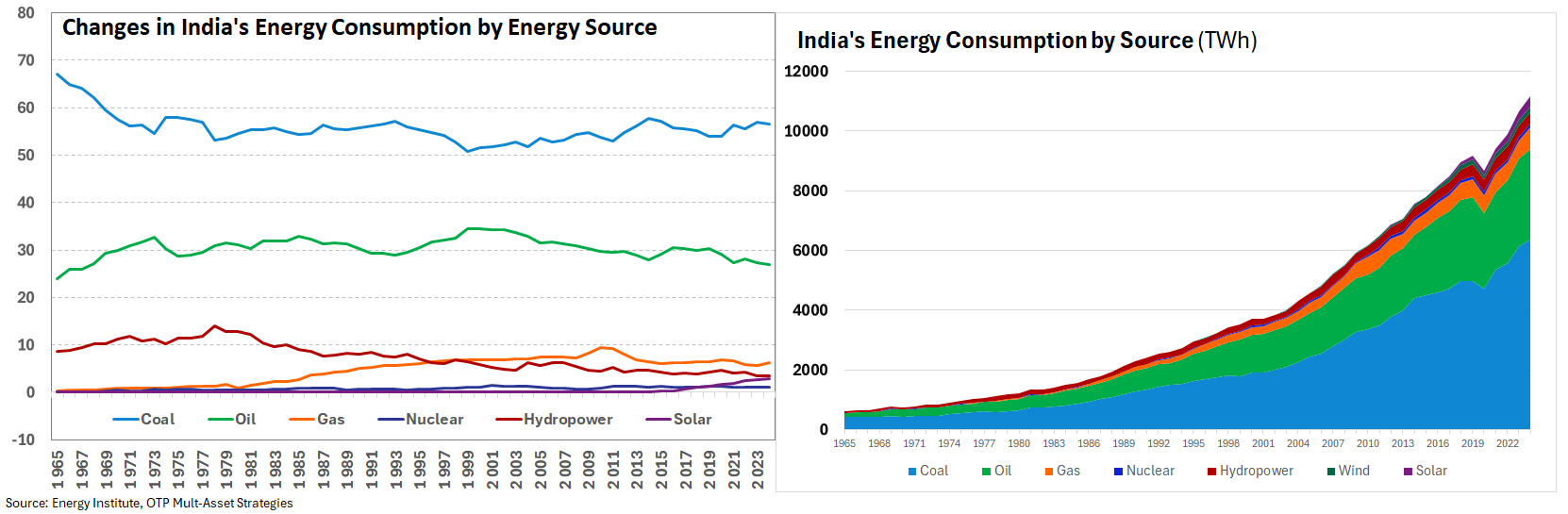
The impact of the Iran conflict on the Indian economy was partially mitigated by diversified energy imports, fuel price regulations, and lower U.S. tariffs. However, the El Nino weather phenomenon also poses a risk: according to Indian forecasts, El Nino could lead to a weaker monsoon this year, and expected rainfall could drop to levels not seen in more than a decade. Lower crop yields could drive up food prices, and inflation is also expected to rise.
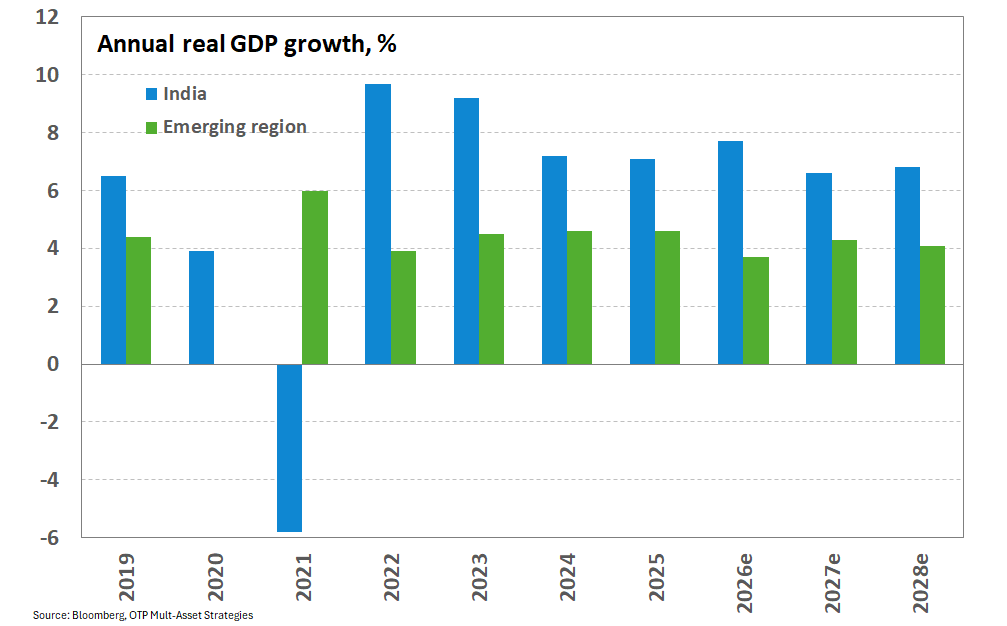
Overall, due to the risks already mentioned, India’s economic growth may be lower this year, although India may still remain among the fastest-growing major economies globally, and according to current expectations, India’s GDP may grow at a faster pace again next year. India’s energy imports account for slightly more than a quarter of its total imports, and rising energy import costs affect the country’s trade balance, current account balance, inflation, and the rupee exchange rate, among other things.
The war has cast a shadow over the rupee
The conflict in Iran had an impact on several fronts; inflation in India rose to 4.4% in June (year-over-year, up from 3.9% in May) due to rising food and energy prices. The central bank left interest rates unchanged in June (at 5.25%) but raised its inflation forecast to 5.1% (from 4.6%), meaning that inflation exceeded the central bank’s inflation target for the first time in seventeen months. The Reserve Bank of India (RBI) maintains a 4% inflation target, with a tolerance band of plus or minus 2 percentage points in either direction.
At the end of June, the Indian central bank governor said it would be premature to discuss interest rate hikes, and that the central bank could adopt a wait-and-see approach in the short term while assessing the impact of the Middle East conflict on the economy and inflation. If the RBI were to act too soon, it would likely come at the cost of lower economic growth. In addition, El Nino poses a risk; some forecasts suggest that inflation could exceed the upper limit of the central bank’s 6% tolerance band by October. According to the median consensus, a 25-basis-point rate hike is currently expected in the fourth quarter, followed by another hike of the same magnitude in the first quarter of next year.
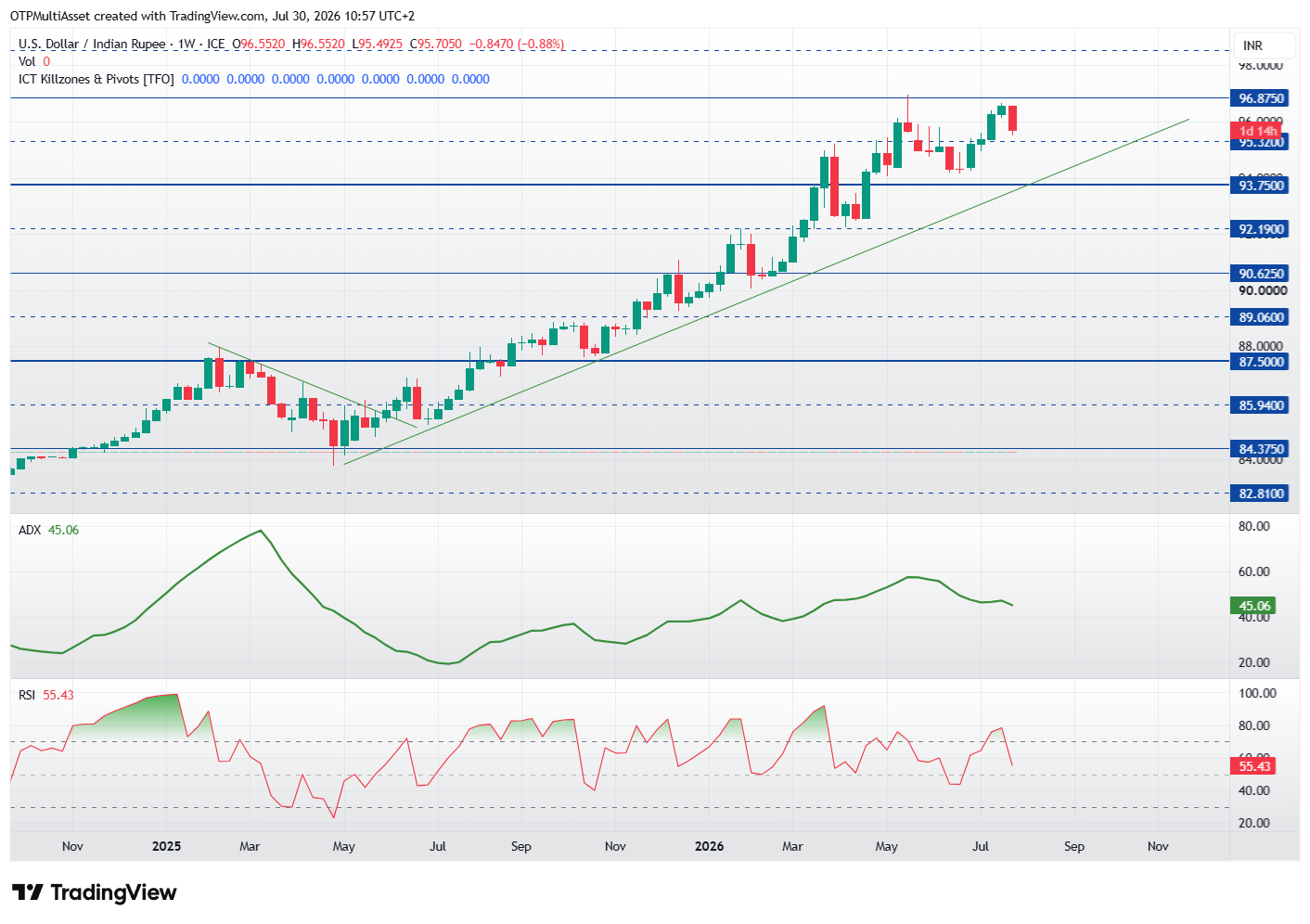
The rupee weakened to a new low against the dollar in late May, as India’s current account outlook deteriorated amid rising oil prices. The central bank announced a comprehensive package of measures in early June to defend the rupee. The RBI introduced a preferential foreign exchange swap facility for state-owned enterprises raising funds abroad (encouraging companies to repatriate the foreign currency thus obtained) and eased regulations on foreign investment in Indian government securities. It also assumed the hedging costs associated with higher-yielding deposits held by non-residents in India from the banks.
Amid the escalation of tensions between the U.S. and Iran since early July, oil prices have risen again in recent weeks, which—along with a slight strengthening of the dollar—has partially offset the supportive effect of the central bank’s package of measures. However, at the end of July, the central bank governor sought to reassure investors regarding the rupee’s situation: the weakness of the USDINR exchange rate reflects geopolitical tensions and volatility in emerging markets rather than a deterioration in the fundamentals of the Indian economy.
USDINR technical picture
A long-standing uptrend can be identified on the weekly chart. However, buying pressure has eased in recent weeks; the zone above 96.87 may now be a good place to close out long positions, and it no longer appears suitable for opening additional long positions. In the event of a pullback to around 90, it might be worth looking for better buying opportunities again.
What lies ahead for the Indian economy?
In addition to the Iranian crisis and its economic repercussions, India has most recently made international headlines due to the Generation Z protests, which were partly triggered by the leak of questions from the national medical entrance exam taken by more than 2 million students. The Indian government ultimately met the demands of the youth movement leading the protests, the CJP (a name referring to the ruling BJP, the Bharatiya Janata Party); the education minister resigned, marking one of the biggest political setbacks of Prime Minister Modi’s tenure.
Among the possible factors behind the protests, it is worth noting that while the unemployment rate among young people has declined compared to levels seen following the COVID-19 pandemic, it remains close to 10 percent in the 15- to 29-year-old age group. Commentators note the gap between young people’s opportunities and expectations, as well as fears that the rise of artificial intelligence could disrupt entry-level office jobs (It is also worth noting that in 2023, more than two-thirds of unemployed Indians aged 20–29 were graduates, compared to 46% in 2017).
India’s youth population of nearly 400 million represents a significant economic advantage; however, ensuring that sufficient opportunities are available to India’s young people is also crucial for the country’s economic growth and political stability. The government intends to give priority to both education and youth, but as part of this, it is worth taking a closer look at the government’s overarching vision, which, under the Viksit Bharat 2047 framework, has set the ambitious goal of transforming India into a developed nation by 2047—the centennial of its independence.
One of the quantified economic goals is a significant increase in GDP, with targets of $30 trillion and $40 trillion by 2047. According to the latest economic survey by India’s Ministry of Finance, for India to become a developed country by 2047, it would require sustained annual economic growth of nearly 8 percent over a decade (the IMF’s current medium-term forecast projects annual real GDP growth of approximately 6.5 percent between 2028 and 2034). The plan is indeed ambitious: if the Indian economy were to grow at an annual rate of 10 percent with clockwork precision between 2027 and 2047, it could approach the $30 trillion mark. If we take “only” the growth rate projected by the IMF as a basis, the size of India’s economy would more than triple from current levels.
To achieve a higher growth rate, the investment-to-GDP ratio would be raised from 31% to 35%; the Ministry of Finance specifically highlighted the East Asian economies (Japan and China) as historical analogies. In addition, the manufacturing sector would be further developed, and investments would be made in new technologies emerging in industries such as artificial intelligence, robotics, and biotechnology. India would also achieve a 100 percent literacy rate (which had already exceeded 80 percent by 2024), reduce poverty, improve the quality of education, and develop infrastructure.
Overall, the government’s efforts to develop India’s economy, in tandem with initiatives aimed at transforming the country, could steer India in a direction that will keep it firmly on investors’ radar. However, twenty years is a long time; even if India’s growth exceeds that of other emerging markets in the coming years, the pace of economic growth is unlikely to be steady, and it is entirely realistic to expect occasional periods of slower growth.
In addition to the economic implications of this issue, political uncertainty may also intensify as time goes on; by the time of the next election (scheduled for 2029), Prime Minister Narendra Modi will likely already be contemplating his succession due to his age. It is also an interesting question how India’s political landscape will evolve over the next twenty years (the government’s retreat in the face of a series of youth protests clearly demonstrated how significant changes can occur even in a short period of time). And finally, regardless of which political force ends up leading India in the future, as investors we can only hope that the country’s continued development will remain their top priority moving forward.
Get more out of your investments!
Global Markets Services
OTP Global Markets offers a broad range of services in the field of local and international money and capital markets.
Read morePrivate Banking Services
Personal care and expertise with OTP Private Banking, along with the knowledge, security, and innovations of a multinational banking group.
Read more