
The renewed US-Iran conflict has dampened momentum in Europe
Related content
US bank shares fell
The third-quarter earnings season in the US has picked up pace following the release of the latest figures from US banks. Based on preliminary expectations, the third quarter is likely to have closed with strong earnings growth for S&P 500 companies, led by the energy and technology sectors. The major US banks have still achieved solid growth on an annual basis, indicating that their operations remain strong, but the pace has clearly slowed in many cases, which has tended to result in negative share price reactions.
Commodities - Technical Analysis
Gold and silver continued their downward trend, bouncing off key levels. Until their downward trends are broken, they will not be able to produce a significant rise. The fall in oil prices reversed from the $87.5 level and began a slight upward movement. Natural gas remained in an uptrend; a significant rise could even occur if it breaks out upwards. The price of copper has become stuck in a wider range, so the oversold and overbought zones may offer more favourable trading opportunities. The falling prices of wheat and corn have reached key support levels; a buying reaction from these levels could present favourable long opportunities with limited risk.
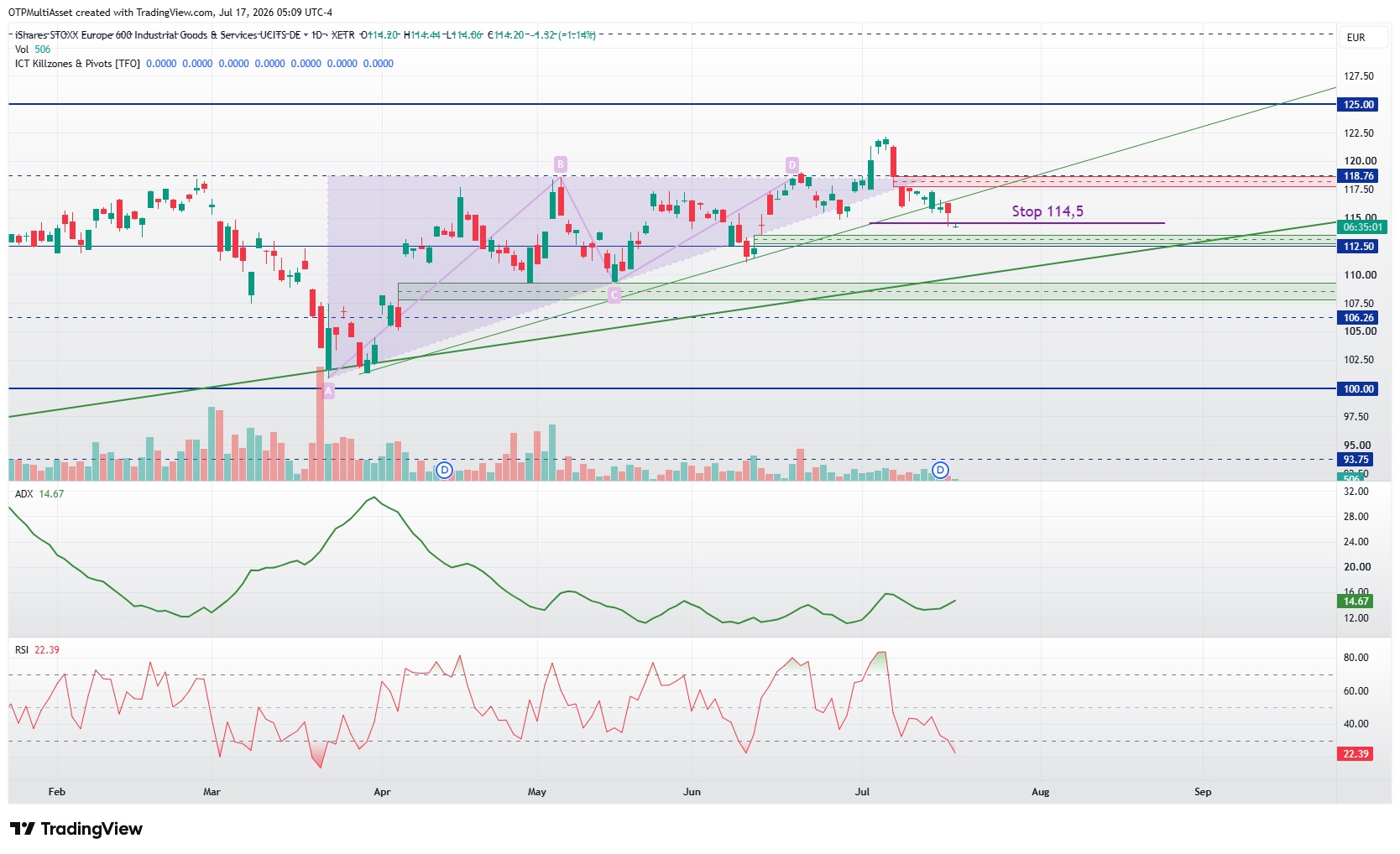
Attacks between the U.S. and Iran resumed this week, causing traffic in the Strait of Hormuz to grind to a halt once again, which sent prices for goods passing through the strait on an upward trajectory. Brent crude jumped 17% this week, while the European TTF natural gas price surged nearly 30%, triggering a correction in European stock markets as well. All of this halted the momentum of the industrial sector, which had reached a new high just last week, causing our trading idea to hit its tight stop-loss level.
Although we had indicated even after the signing of the U.S.-Iran memorandum of understanding that this temporary ceasefire period appeared fragile, we did not expect the situation to tip back toward escalation within a month. The U.S. has been attacking Iran for six days now, and Iran has responded with strikes of its own in the region, preventing traffic through the Strait of Hormuz from picking up further. The U.S. is threatening to attack Iran’s energy infrastructure, to which Iran is responding by threatening strikes against Red Sea shipping by Yemeni Houthi rebels.
As a result, energy prices have begun to rise again in recent days, and if the fighting continues, this trend could persist in the coming period. This, in turn, could negatively impact European stock markets—and within them, the industrial sector, which is more sensitive to energy prices—so we are closing out our trading idea, which has since stalled at a loss of around 5%.
From a technical perspective, the breakout attempt that began two weeks ago ran out of steam; the price fell below the 118.75 level and, within a few days, left a downward gap. Ideally, the market should have filled this gap within two to three days, but this did not happen, suggesting the likelihood of further weakness.
Get more out of your investments!
Global Markets Services
OTP Global Markets offers a broad range of services in the field of local and international money and capital markets.
Read morePrivate Banking Services
Personal care and expertise with OTP Private Banking, along with the knowledge, security, and innovations of a multinational banking group.
Read more