
A historic turning point in Brazil’s presidential election
Related content
Glencore: clouds are gathering over the metals market
Glencore, the commodities giant, has achieved excellent financial results so far in 2026, but in our view, the outlook has taken an unfavorable turn, especially in the metals and mining sector, where both copper and zinc prices have been trending downward in recent weeks. Among other factors, weaker Chinese economic data and deteriorating AI sentiment may have played a role here, as data centers use significant amounts of copper. At the same time, although coal prices have improved significantly this year, we would have expected even higher prices given the tight conditions in the energy market. Accordingly, we are removing Glencore from our Equity Top Pick List. The stock has provided a return of about 26% including dividends since we added it to our list last December despite the decline in recent weeks.
FX - Technical Analysis
Following the correction seen over the past month, the U.S. dollar has regained strength against its major currency counterparts. The EUR/USD exchange rate has broken below the 1.1108 level, confirming the continuation of the downward trend. The dollar is also in a favorable position against the British pound, with the exchange rate potentially extending its move after breaking below the lower boundary of a broader trading range.In the case of EUR/HUF, the recent narrowing price action may soon come to an end, potentially leading to an upside breakout from the triangle pattern. The Hungarian forint had already been showing signs of depreciation against the U.S. dollar earlier, and this trend may continue with the formation of new swing highs. USD/JPY broke out to the upside from a narrowing range two weeks ago; however, the breakout has not yet been accompanied by particularly strong momentum. As for EUR/CHF, following a recent modest correction, the downward direction may once again come into focus.
In Brazil’s presidential election, Lula achieved something no one had managed in nearly four decades: he overturned a first-round defeat to win the runoff and he will become president for a fourth term. However, market participants had priced in a victory for Flávio Bolsonaro and, with it, the prospect of a fiscal turnaround. Lula’s win therefore triggered a significant correction in the Brazilian stock market. Lula will face a difficult balancing act between market participants demanding fiscal consolidation, voters expecting him to deliver on his campaign promises, and an increasingly right-leaning Congress where governing will require political compromise. Although Brazilian equities remain attractively valued, post-election uncertainty may keep Brazilian assets under pressure in the short term.
Lula has done something that no one else has ever managed to do
Flávio Bolsonaro’s victory in the first round of the Brazilian presidential election came as a surprise, but as the second round approached, the gap between him and President Lula has narrowed to a minimum, according to opinion polls. Meanwhile, there has also been some shift in the levels of rejection to the candidates: the proportion of those who are certain not to vote for Bolsonaro has risen slightly, according to the polls, whilst the proportion of those who are certain not to vote for Lula has fallen slightly between the two rounds.
The result of the second round ultimately delivered a historic surprise, as Lula managed to turn the tables and ultimately defeated Flávio Bolsonaro, who received 48% of the vote, by securing nearly 52% of the vote. It is worth noting that, compared with the first round, the number of abstentions and invalid votes also fell in the second round. Lula has achieved what no other candidate has managed since the late 1980s: to turn the tide after losing the first round and ultimately win the Brazilian presidential election in the second round. Furthermore, he is the first person to have been elected president for a fourth term.
Even before the second round, Lula tried to boost his popularity with new measures: support for individual micro-entrepreneurs amongst other things and promising free public transport at weekends. According to local commentators, voters’ fears also played a significant role in the second round, as a section of the voters were concerned that a Bolsonaro victory could lead to public policy changes that would adversely affect lower-income households.
The fact that Lula increased his presence on social media – in an attempt to broaden his reach, convert support into votes, and persuade those who already supported him to actually turn out and vote – may well have played a part in his eventual success in turning the result around. In addition, the large-scale demonstrations held in cities also helped to give Lula’s campaign a boost.
A difficult task lies ahead for the Brazilian president
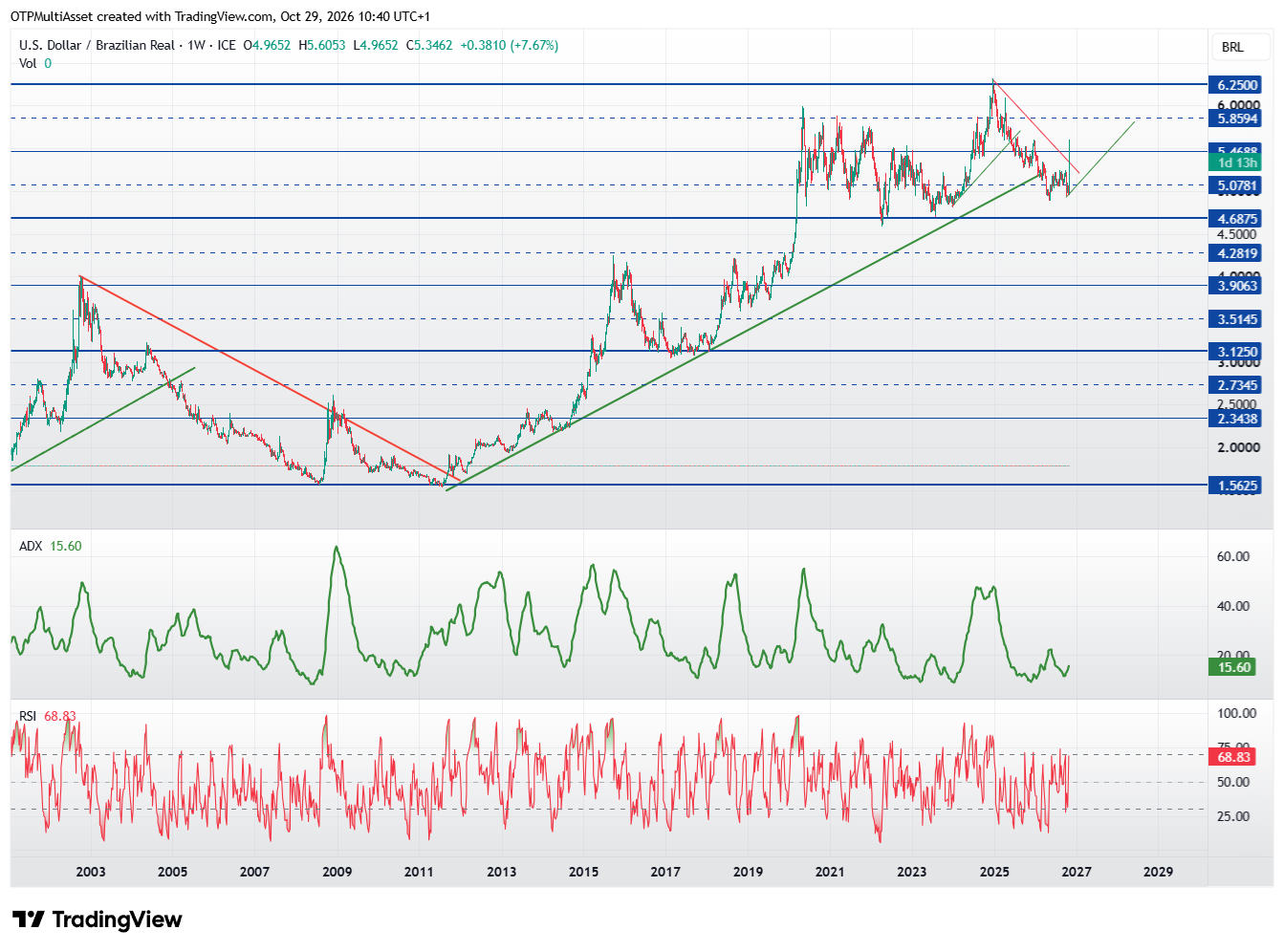
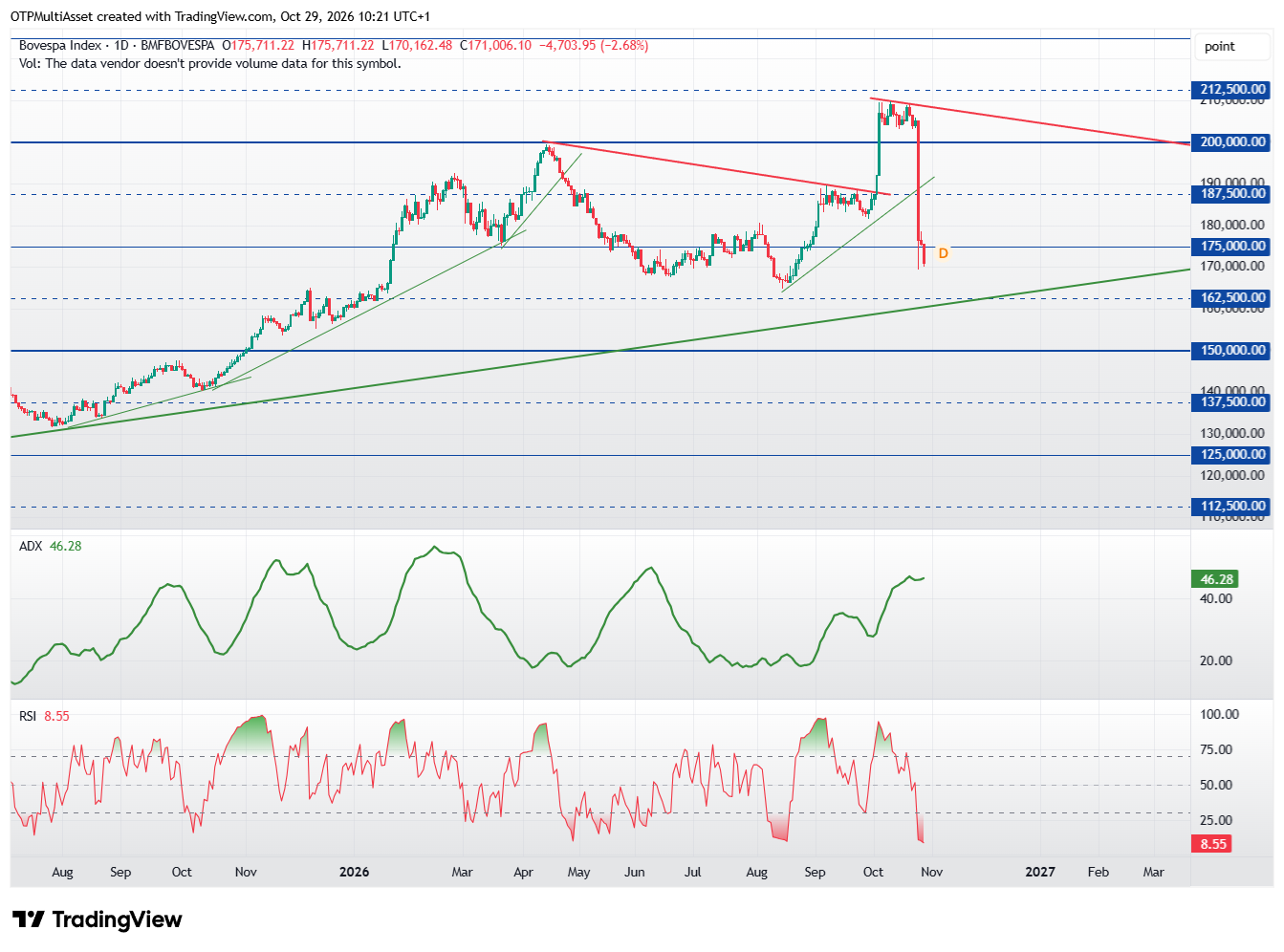
Market participants had priced in a Bolsonaro victory ahead of the second round, so Lula’s surprise re-election triggered a sharp correction in Brazilian assets. The Brazilian stock market has not fallen this sharply since the Covid pandemic. The Bovespa plunged by nearly 14% on the first trading day following the second round; amidst the market shake-up following Bolsonaro’s defeat and Lula’s victory, the index fell back to levels not seen since the end of August. The Brazilian real weakened by more than 8% against the dollar, whilst the yield on ten-year Brazilian government bonds rose by 249 basis points in a single day.
USDBRL
Although Flávio Bolsonaro had called for the results of the second round to be annulled, his party later accepted the outcome of the presidential election. Following the announcement of the election result, a member of the Brazilian Supreme Court canceled Bolsonaro’s passport in connection with a criminal case against him, after which Bolsonaro left Brazil shortly afterwards and travelled to the United States.
It therefore appears that the recognition of the presidential election result will not pose an obstacle for Lula; however, his next presidential term promises to be perhaps the most difficult of all. The president must achieve a budget surplus large enough to stabilize Brazil’s rising national debt; yet this conflicts with his campaign promises, and he may also be forced to make constant compromises on the political front.
According to Brazil’s budgetary target for next year, the primary surplus (excluding interest payments) is to reach 0.5% of GDP, with a margin of tolerance of 0.25 percentage points in either direction. (Lula aims to achieve a primary budget surplus equivalent to 1.3% of GDP by 2030.) Following the election, the finance minister hinted at a more ambitious primary surplus than this year’s, although he did not disclose any specific details.
Lula must win back investor confidence
Market participants are currently seeking greater clarity on whether the president and the new administration will be able to implement a credible fiscal turnaround, and how (and when) they can reconcile any potential adjustments with the campaign pledges they made. Public debt as a percentage of GDP has risen by more than 10 percentage points this year to over 82% since the start of Lula’s previous presidential term. This is because mandatory expenditure has risen steadily in recent years, leaving less than 8% of the budget available for flexible use. It should also be noted that, as a result of high interest rates, more than 80 million Brazilian citizens and more than 9 million businesses are now in arrears with their debts.
From next year, the president will also have to strike compromises in an increasingly right-leaning parliament to ensure governability. According to some commentators, Lula’s party should share power and involve other political actors in key government posts. Furthermore, Lula will have to navigate foreign policy in a Latin America that is shifting increasingly to the right, whilst also having to contend with the often unpredictable Trump administration.
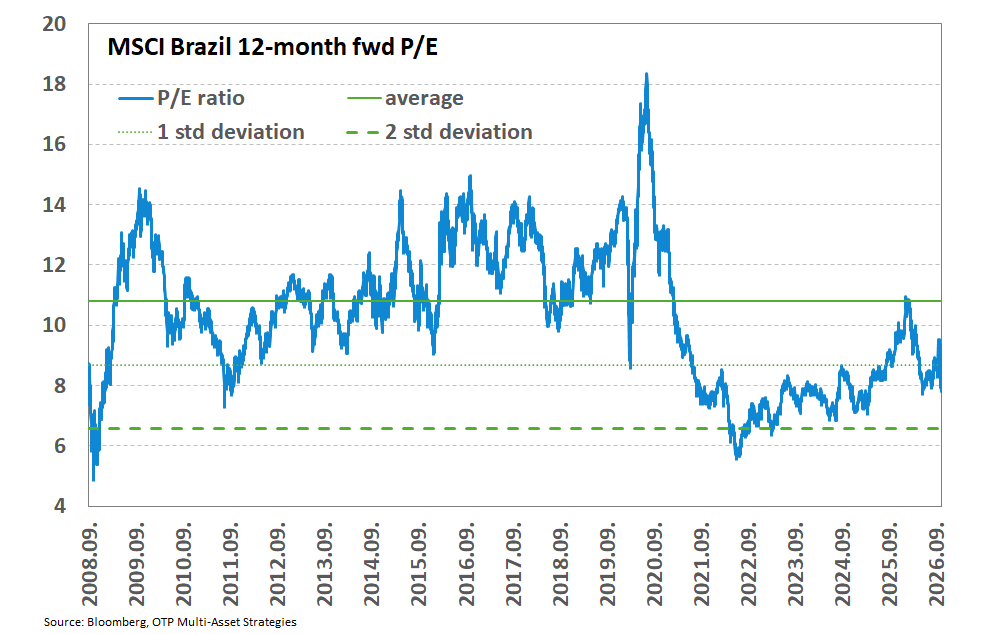
Following the unwinding of market expectations of a Bolsonaro-driven shift, investors began pricing in not only concerns over the fiscal trajectory but also uncertainty surrounding governance. In addition, the correction seen after the second round of Brazil’s presidential election could constrain the central bank’s ability to cut interest rates in the short term. For investors, the identity of the next finance minister and the fiscal policy direction to be pursued will provide a point of reference in the coming weeks, with a positive turn of events likely to have a dampening effect on volatility. The Brazilian market continues to trade at an attractive valuation, with the MSCI Brazil Index’s forward P/E ratio of 8.0 standing below both the 8.7 multiple of the MSCI Emerging Markets Index and its own long-term average of 10.8. Nevertheless, post-election uncertainty may continue to weigh on Brazilian assets in the near term.
All in all, the coming weeks will be crucial for Brazil and the president; Lula will need to reassure market players with tangible results, negotiate and subsequently reach compromises with the right-wing opposition later on, and strike a balance between meeting the demands of the voters following the presidential election. The task is difficult, but not impossible; however, to achieve a successful outcome, the Brazilian president must act as soon as possible.
Bovespa index technical picture
Due to the breakout from the sideways movement above the 200,000 level, this zone could have become a strong resistance level. Should the price correct upwards, a rise of no more than half the extent of the fall could be expected, which could mean the price reaching a level around 187,500. Stronger support is expected around the 162,500 level. A break below this level could trigger a significant change, as it would also break the long-term uptrend, potentially bringing levels around 112,000 back into play.
Get more out of your investments!
Global Markets Services
OTP Global Markets offers a broad range of services in the field of local and international money and capital markets.
Read morePrivate Banking Services
Personal care and expertise with OTP Private Banking, along with the knowledge, security, and innovations of a multinational banking group.
Read more