
Hungary: Lower-than-expected inflation for the third month in a row
Related content
US bank shares fell
The third-quarter earnings season in the US has picked up pace following the release of the latest figures from US banks. Based on preliminary expectations, the third quarter is likely to have closed with strong earnings growth for S&P 500 companies, led by the energy and technology sectors. The major US banks have still achieved solid growth on an annual basis, indicating that their operations remain strong, but the pace has clearly slowed in many cases, which has tended to result in negative share price reactions.
Commodities - Technical Analysis
Gold and silver continued their downward trend, bouncing off key levels. Until their downward trends are broken, they will not be able to produce a significant rise. The fall in oil prices reversed from the $87.5 level and began a slight upward movement. Natural gas remained in an uptrend; a significant rise could even occur if it breaks out upwards. The price of copper has become stuck in a wider range, so the oversold and overbought zones may offer more favourable trading opportunities. The falling prices of wheat and corn have reached key support levels; a buying reaction from these levels could present favourable long opportunities with limited risk.
Hungary's headline inflation increased from 1.4% year-on-year in February, to 1.8% in March. The published data came as a surprise as it was lower than both the consensus (2.2%) and our forecast (2%). The downward surprise mostly came from lower-than-expected inflation of non-durable goods and processed food, while fuel prices rose slightly faster-than-foreseen. Core inflation edged down from 2.1 to 1.9%. The March data do not yet reflect the impact of the war in Iran. Even before the sharp increase in energy prices, we expected inflation to reach its annual low in February, followed by a gradual acceleration, driven by fuel prices and the waning disinflationary effect of food prices, although prices in both categories are still declining on a year-on-year basis.
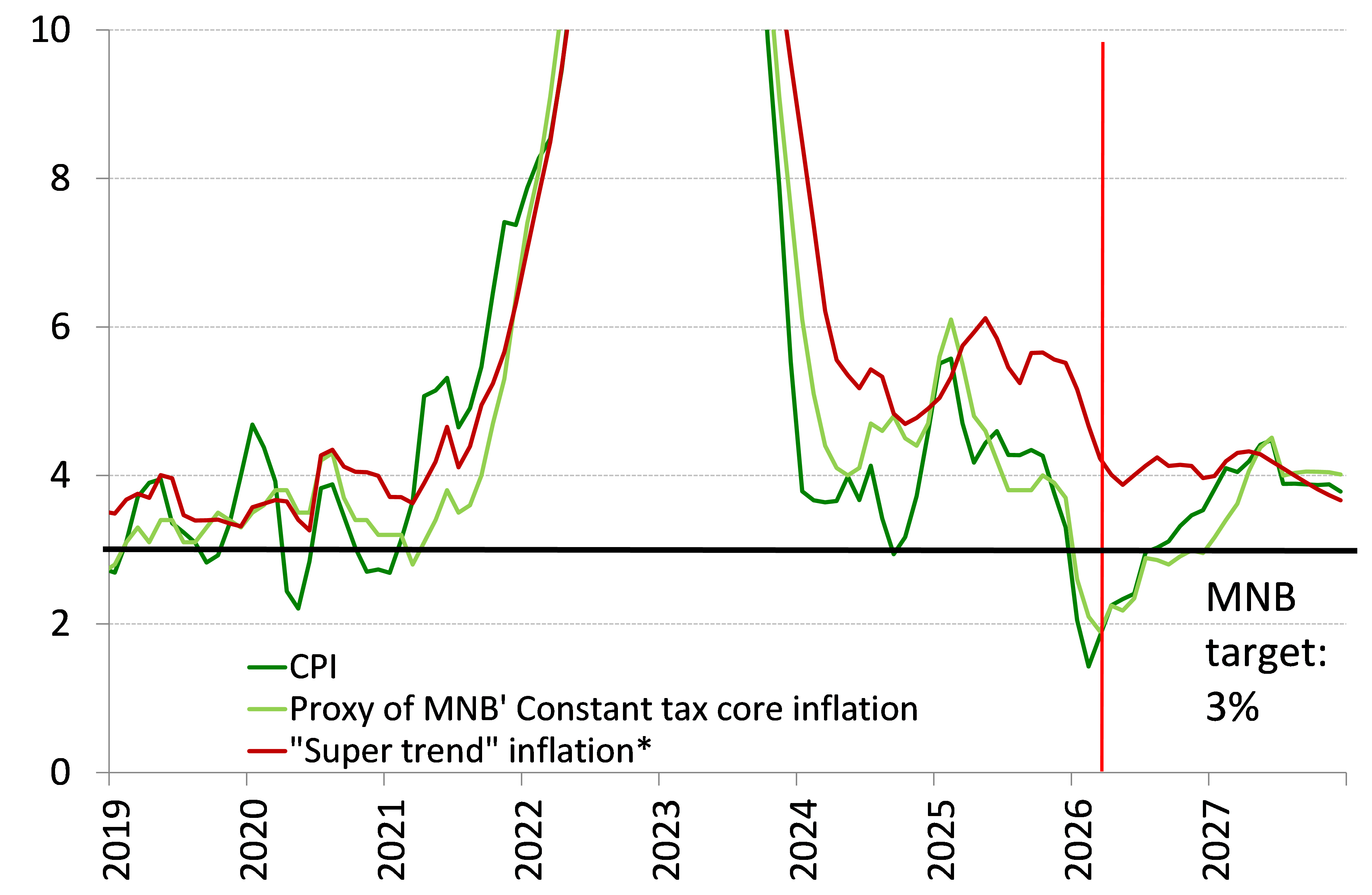
Underlying indicators improved further in March. The MNB’s constant tax core inflation declined from 2.1% to 1.9% YoY, and the sticky price inflation decreased from 4.6% to 4.2% YoY. We should highlight that the MNB’s constant tax core inflation contains some items that were affected by the margin cap measures and it also contains the mainly backward-looking pricing of telecom and financial services, which are also affected by the "voluntary" price freezes proposed by the government. Hence, we think our “super trend” inflation (Chart 9) indicator is the better underlying gauge in the current environment as it does not contain telecommunication or financial services, and it is filtered from the margin cap’s effect, therefore it is not affected by any administrative measures. The annualized MoM change of our trend inflation indicator increased from 1.8% to 2.6%, and the repricing of market services, which is closely watched by the central bank, remained subdued in March. As our "super trend" indicator remained favourable in the first three months of 2026, we can now say with increasing certainty that the inflation risks linked to the 11% minimum wage hike and to the government's consumption-stimulating measures did not materialize, and the strong exchange rate and weak economic growth appear to have brought lower re-pricing at the beginning of the year.
The March inflation data reinforce the view that the effects of the war in Iran are hitting the economy at a point when the inflation situation is relatively favourable. It is important to emphasize that energy prices have the strongest and fastest impact on inflation through fuel and energy prices. In Hungary, household energy prices are regulated, and we assumed that the government would not raise them. Furthermore, the Hungarian government has also capped fuel prices so rising oil prices will have only a limited impact on this product group as well. As a result, the effects of rising energy prices are reflected in inflation in a much less direct and slower manner (rising transport costs, corporate energy prices, etc.). As a consequence, we expect 2.9% inflation in 2026 and the effect of the Iranian war can be around only 0.5ppts in our baseline scenario (with oil prices following the forward price curve). It is also important to note that fertilizers for spring agricultural work are typically purchased in early stages; moreover, the introduction of EU carbon tariffs this year led to increased stockpiling. Furthermore, the European food market is characterized by oversupply in several segments (milk, meat), and grain silos are also at very high levels of capacity. For these reasons, we do not currently expect a drastic price increase similar to that of 2022 in the agricultural products market, which also mitigates the inflationary effects of the war in Iran.
Although March's inflation data was lower both than the market consensus and the MNB’ short-term forecast (1.9%) and there has also been positive news regarding the war in Iran, the central bank will almost certainly wait to make its next interest rate adjustment until it has a clearer picture of the current "risk landscape." A half-hearted ceasefire aside, the extent of the shock to the energy market will depend on how quickly shipping traffic in the Strait of Hormuz can return to normal—which, in addition to the "reopening" of the strait, also depends on the extent of damage to the energy infrastructure of the Gulf states. Furthermore, the central bank will likely wait until it becomes clear how risk premiums will develop following the elections before adjusting the interest rate in either direction. Since we believe that inflation trends are developing favorably, we expect that the central bank will have the opportunity to cut interest rates in the last third to quarter of the year. However, we do not expect more than one rate cut, because, on the one hand, food inflation is contributing very strongly to disinflation this year, but in 2027 we expect this to come to an end, and food inflation will exceed the overall inflation rate; on the other hand, the spillover of second-round inflationary effects will impact 2027 inflation at least as much as it did this year. Risks are huge, further escalation on the Middle East could force the central bank to hike rates, while a fast normalisation on energy markets especially with a market-friendly shift in domestic economic policies could pave the way for more rate cuts.
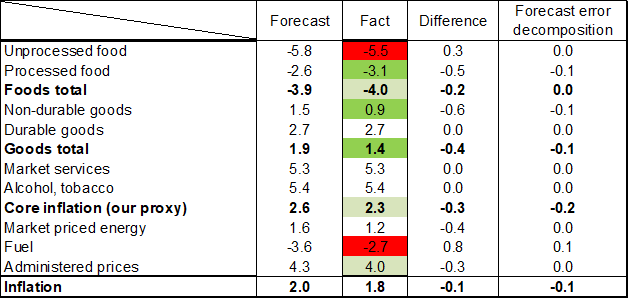
Inflation forecast (annual changes, %)
Get more out of your investments!
Global Markets Services
OTP Global Markets offers a broad range of services in the field of local and international money and capital markets.
Read morePrivate Banking Services
Personal care and expertise with OTP Private Banking, along with the knowledge, security, and innovations of a multinational banking group.
Read more