
OTP Morning Brief: Geopolitical tensions in the Middle East remain elevated
Related content
OTP Morning Brief: US producer price index came in above expectations, yet the US 10-year Treasury yield still declined
Western European equities continued to advance despite ongoing pressure on the technology sector. Wall Street indices also rebounded, recovering some ground after Wednesday’s sell-off. Healthcare was the standout performer on both sides of the Atlantic. Eurozone industrial production declined by 0.5% month-on-month in August. In the US, the producer price index accelerated to 6.3%, delivering another upside surprise in inflation developments. US retail sales increased by 0.8% compared to August. The US 10-year Treasury yield declined by more than 10 basis points. The long end of the Hungarian government bond yield curve also declined by 7-9 basis points. In Hungary, August wage data will be released today, while in the US, September industrial production figures are due.
OTP Morning Brief: US CPI data came in above expectations
European equity markets advanced, supported by strong results from ASML and the outstanding performance of the healthcare sector. US equity markets came under pressure following higher-than-expected September CPI data. The annual CPI rate accelerated to 3.7%, driven primarily by a surge in gasoline prices, while core CPI rose by 0.3% month-on-month, supported by higher housing costs and rising transportation service prices. Oil prices rose amid escalating tensions in the Middle East and the impact of the IEA's oil market report. US Treasury yields retreated after an initial increase, driven by Fed commentary, while European bond yields generally moved higher. The US macro calendar will be busy today, with investors focusing on September retail sales and producer price index data, as well as the New York Fed Manufacturing Index, weekly jobless claims, and business inventories. August industrial production data from the euro area will be released today.
European indices closed lower on Tuesday, as persistent geopolitical tensions and expectations of further interest rate hikes continued to weigh on sentiment. Major US indices edged lower on Monday; the US government did not support Apple’s procurement of Chinese memory chips; meanwhile, the New York Fed’s manufacturing activity index improved. Developed market bond yields moved modestly higher, while the Hungarian forint weakened slightly against the euro. Today, the focus will be on Germany’s ZEW Economic Sentiment Index, UK unemployment data, and US industrial production and housing market figures.
European indices closed lower on Tuesday, as persistent geopolitical tensions and expectations of further interest rate hikes continued to weigh on sentiment
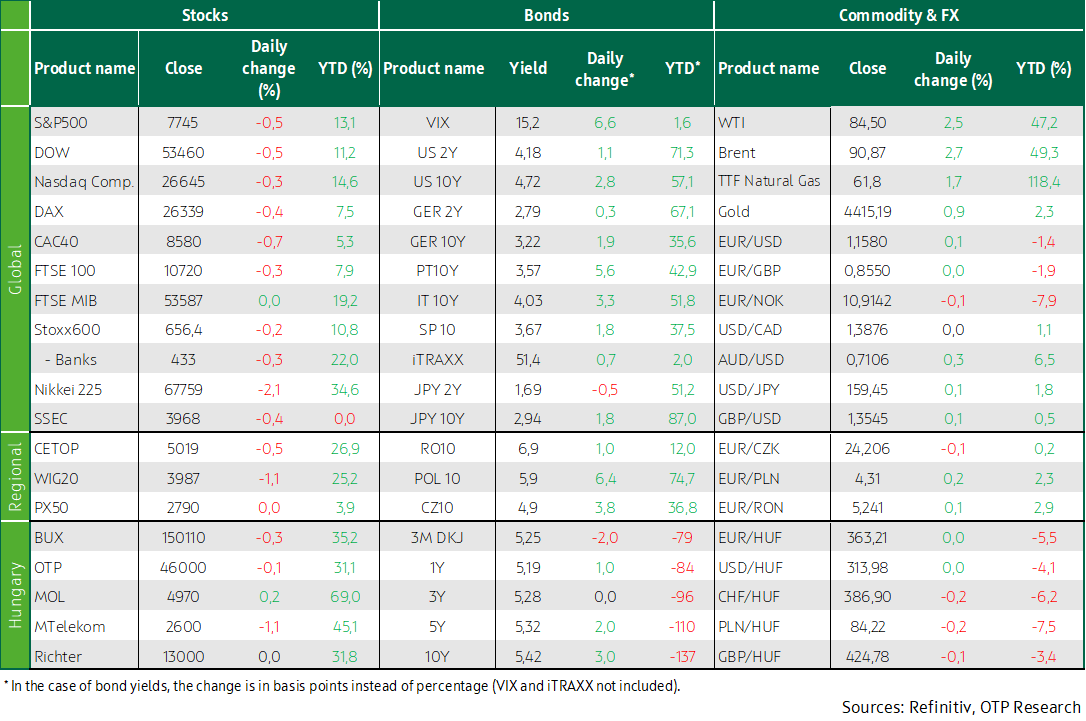
After early gains, European equity markets ultimately closed modestly lower yesterday, with the STOXX 600 index ending the session down 0.2%. As the corporate earnings season drew to a close, investors increasingly shifted their focus toward macroeconomic and geopolitical developments, as well as upcoming central bank decisions in September. Geopolitical tensions in the Middle East remained elevated after Iran refused to extend the temporary agreement that expired on Monday, while Donald Trump threatened to bomb Oman should it complicate negotiations between the US and Iran. Sentiment was further weighed down by market pricing, which indicated a 94% probability of a 25-basis-point rate hike by the European Central Bank in September, making such a move virtually certain, while investors also continued to price in the possibility of a second increase later this year. At the same time, the market received support from Goldman Sachs, which raised its 12-month target for the STOXX 600 index to 695 from 660, implying an additional upside potential of approximately 5.5% from current levels.
Among individual stocks, Accelleron surged 5.6% after Berenberg upgraded the company’s shares to buy. At the other end of the spectrum, SIG Group was the worst performer of the day, with its stock dropping 17.6% after the company appointed its chief financial officer as CEO, less than six months after the previous chief executive had taken office.
Major indices across the CEE region also closed lower yesterday, with the Polish market posting the largest decline, while Prague’s index was virtually unchanged. Among Hungarian blue chips, MOL managed to rise, Richter traded flat, while the other two heavyweight stocks ended the session lower.
Major US indices edged lower on Monday; the US government did not support Apple’s procurement of Chinese memory chips; meanwhile, the New York Fed’s manufacturing activity index improved
A modest decline emerged in US equity markets yesterday, while oil prices moved higher amid escalating geopolitical tensions in the Middle East. Investor sentiment was primarily shaped by the expiration of the ceasefire agreement between Washington and Tehran, as Iran ruled out extending negotiations and signaled that it could adopt a tougher stance should diplomatic efforts fail. Some technology stocks, however, outperformed the broader market. Micron Technology shares rose 4.1% after the US administration indicated that it did not support Apple’s procurement of Chinese memory chips, a development that could improve the outlook for US manufacturers. Optimism surrounding the AI sector was further reinforced by Anthropic’s strong revenue figures.
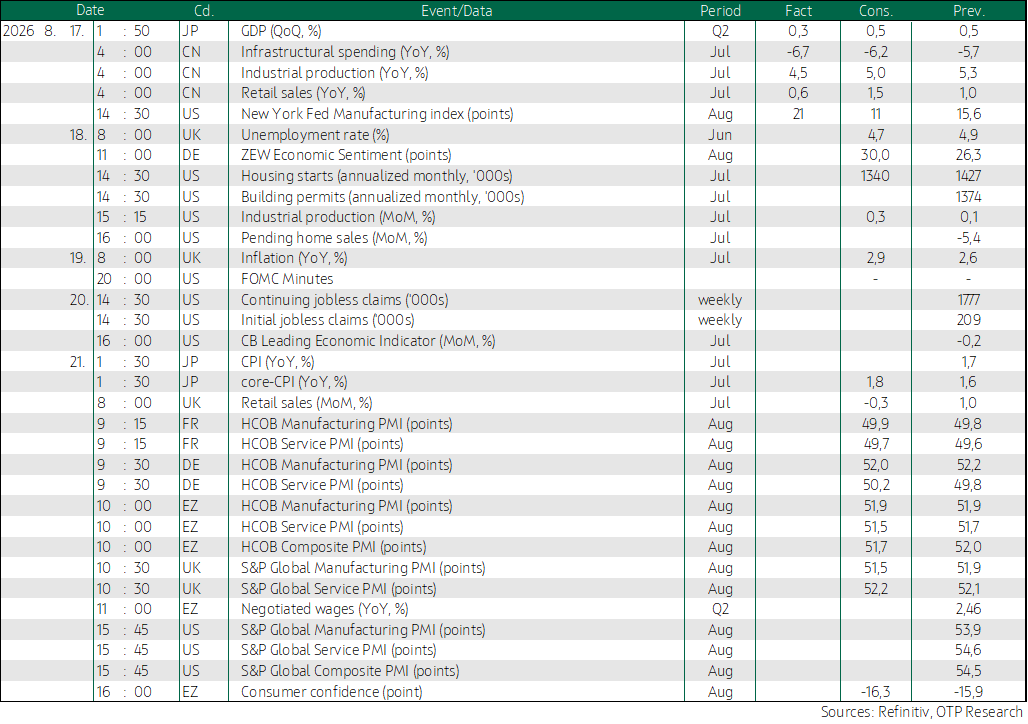
The New York Fed’s manufacturing activity index rose to 20.6 in August from 15.6 in July, significantly exceeding market expectations of 11.0. The data indicate that manufacturing activity in New York State expanded for a second consecutive month, with the pace of growth reaching its strongest level since late 2021. According to the report’s details, both new orders and shipments continued to show robust growth, while the delivery times index increased to 20.6, pointing to renewed strains in supply chains. Employment and hours worked also posted moderate gains. The pace of growth in input costs accelerated, whereas increases in selling prices moderated, although they remained elevated. Overall, business expectations remained favorable, with firms anticipating stronger demand, higher shipment volumes, and further job growth in the months ahead. However, pricing pressures continue to pose a risk. Meanwhile, capital spending plans remained subdued.
Developed market bond yields moved modestly higher, while the Hungarian forint weakened slightly against the euro
US Treasury yields moved higher yesterday, while oil prices resumed their upward trajectory amid escalating tensions between Iran and the US. The yield on the 30-year US Treasury bond rose by 5 basis points to 5.31%, marking a 19-year high. Meanwhile, the 10-year yield increased by nearly 3 basis points, while the 2-year yield added 1 basis point. According to market participants, the rise in yields was partly driven by higher energy prices and the associated CPI risks. US WTI crude oil rose 2.5% to USD 84.5 per barrel, while Brent crude climbed above USD 90 per barrel, as the deadline for a peace agreement between Washington and Tehran approached and Iran signaled that it would not support an extension of the arrangement. At the same time, analysts increasingly argue that the main driver behind the increase in long-dated yields is no longer CPI, but rather the deteriorating fiscal position of the US, rising government debt issuance, higher risk premiums demanded by investors, and the substantial capital requirements of AI-related investments, which are increasing supply in the corporate bond market. Data released last week showed that the US budget deficit climbed to its highest monthly level in more than five years, further intensifying concerns about fiscal sustainability.
In line with international trends, Hungarian yields beyond the one-year segment rose by 1-3 basis points yesterday, with the 10-year benchmark closing at 5.42%. The Hungarian forint was virtually unchanged against the euro, ending the session above 363. After an initial advance, the euro ultimately showed little change against the US dollar and fluctuated near the 1.16 level.
Today's highlights
Major Asian indices were mostly trading lower this morning after the temporary agreement between Iran and the US expired, while Tehran announced that it would shift from a defensive posture to conducting offensive military operations.
Today, the focus will be on Germany’s ZEW Economic Sentiment Index, UK unemployment data, and US industrial production and housing market figures.
Get more out of your investments!
Global Markets Services
OTP Global Markets offers a broad range of services in the field of local and international money and capital markets.
Read morePrivate Banking Services
Personal care and expertise with OTP Private Banking, along with the knowledge, security, and innovations of a multinational banking group.
Read more