
OTP Morning Brief: Wall Street Kicked Off the Earnings Season with a Bang
Related content
OTP Morning Brief: US producer price index came in above expectations, yet the US 10-year Treasury yield still declined
Western European equities continued to advance despite ongoing pressure on the technology sector. Wall Street indices also rebounded, recovering some ground after Wednesday’s sell-off. Healthcare was the standout performer on both sides of the Atlantic. Eurozone industrial production declined by 0.5% month-on-month in August. In the US, the producer price index accelerated to 6.3%, delivering another upside surprise in inflation developments. US retail sales increased by 0.8% compared to August. The US 10-year Treasury yield declined by more than 10 basis points. The long end of the Hungarian government bond yield curve also declined by 7-9 basis points. In Hungary, August wage data will be released today, while in the US, September industrial production figures are due.
OTP Morning Brief: US CPI data came in above expectations
European equity markets advanced, supported by strong results from ASML and the outstanding performance of the healthcare sector. US equity markets came under pressure following higher-than-expected September CPI data. The annual CPI rate accelerated to 3.7%, driven primarily by a surge in gasoline prices, while core CPI rose by 0.3% month-on-month, supported by higher housing costs and rising transportation service prices. Oil prices rose amid escalating tensions in the Middle East and the impact of the IEA's oil market report. US Treasury yields retreated after an initial increase, driven by Fed commentary, while European bond yields generally moved higher. The US macro calendar will be busy today, with investors focusing on September retail sales and producer price index data, as well as the New York Fed Manufacturing Index, weekly jobless claims, and business inventories. August industrial production data from the euro area will be released today.
Two opposing forces clashed across global markets today: the renewed conflict in the Middle East and soaring oil prices driven by Iran’s blockade fueled significant CPI concerns during the first half of the day. However, the afternoon brought a major relief as the US CPI report came in well below expectations, showing signs of disinflation and immediately easing market concerns. The favorable US macroeconomic backdrop sent Treasury yields tumbling, while the Hungarian bond market closed with a modest rise in yields, reflecting the lingering impact of the morning’s pessimistic sentiment. Meanwhile, the earnings season burst into action on equity markets, with Wall Street’s major banks delivering record-breaking profits. In Europe, the energy sector—benefiting from higher crude oil prices—saved the day amid weaker-than-expected performance from software companies, allowing the continent’s markets to close in positive territory. In Hungary, real-economy data delivered an unpleasant surprise, as the latest reports showed a sharp contraction in the Hungarian construction sector due to the lack of government orders.
Moderately Positive Results Led by the Energy Sector
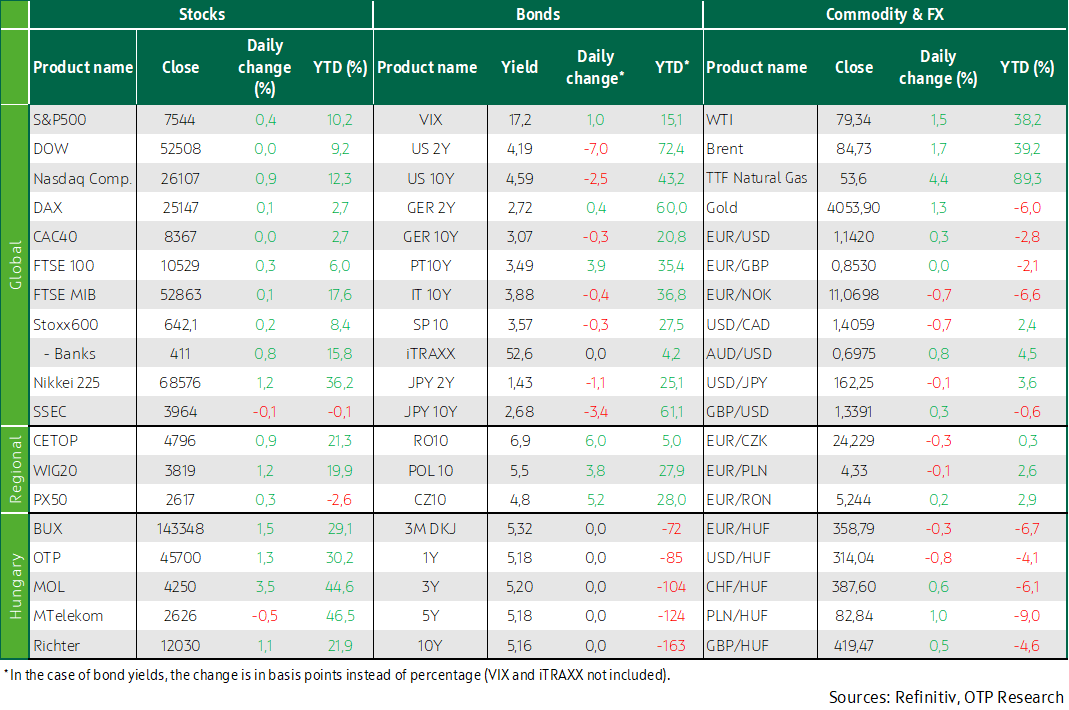
European stock markets ultimately closed modestly higher despite spending part of the session in negative territory. The pan-European STOXX 600 index gained 0.2%, supported by the strong performance of energy stocks, which offset weakness in the defense and travel sectors. The FTSE 100 also finished the day slightly higher, closing up 0.3%. Commodity-related shares advanced 2.4% amid rising tensions in the Strait of Hormuz. Higher oil prices lifted European oil and gas stocks by 1.3%, with BP emerging as one of the sector’s top performers, ending the session 2.3% higher. Software stocks struggled throughout the day, with SAP falling 2.8% and Capgemini declining 1.6%. Shares of Sweden’s Ericsson plunged 13.8% after the company released quarterly results that came in well below expectations. Investors are now turning their attention to ASML’s upcoming earnings report, which could provide important insights into demand trends across the AI-related chip and semiconductor industry.
Natural gas prices remained on an upward trajectory throughout the day, with the one-month forward contract climbing to EUR 54.59/MWh, marking a 2.7% increase.
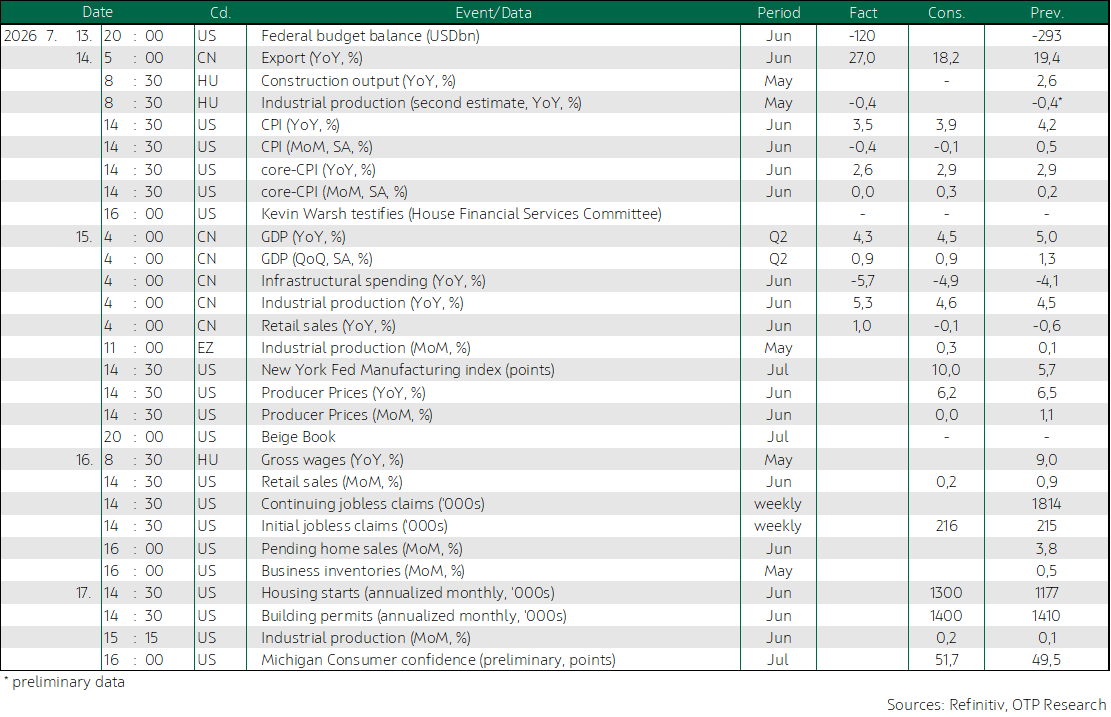
Regarding Hungarian macroeconomic data, construction output declined by 10.7% year-on-year and 6.5% month-on-month, primarily due to a 46.2% drop in road and railway construction activity.
In the region, the BUX gained 1.52%, while Poland’s WIG 20 advanced 1.32% and the Czech PX Index rose 0.29%, with all three markets closing the trading day in positive territory.
Among Hungarian blue chips, the trading day ended on a positive note. OTP gained 1.3%, while Richter rose 1.1%. The day’s top performer was MOL, which surged 3.5%. In contrast, Magyar Telekom slipped 0.5% by the close.
Record Profits Push Wall Street Banks to All-Time Highs
The Nasdaq Composite closed the day with a 0.90% gain, supported by another strong session in the AI-driven rally. The S&P 500 posted a more moderate advance, rising 0.38%. Meanwhile, the Dow Jones Industrial Average traded largely sideways throughout the day and finished virtually unchanged, edging up just 0.02% from the previous close. The accelerating earnings season was clearly dominated by the largest US investment banks. Goldman Sachs reported its highest quarterly profit in five years, prompting investors to send the stock 9% higher. JPMorgan also delivered record net earnings, with its shares rising 2.5%. Bank of America likewise reported a record quarter, helping the stock gain 1.9% and close trading at an all-time high.
Today's macroeconomic data came in better than expected. Driven by lower oil prices, headline CPI declined by 0.4% month-on-month, while the annual rate eased to 3.5%, compared with market expectations of 3.8%. Core CPI fell from 2.9% to 2.6% year-on-year and remained unchanged on a monthly basis, contrary to expectations for a 0.2 percentage point increase. Following the stronger-than-expected CPI report, interest rate hike expectations eased somewhat, with markets beginning to price out additional monetary tightening. As a result, the probability of a Fed rate hike in September dropped below 60%.
US Yield Correction and Rising Hungarian Closing Yields
US Treasury yields moved lower after June CPI data came in more favorable than expected. Although yields had reached an eight-week high earlier in the day amid uncertainty surrounding Iran’s blockade, sentiment improved sharply in the afternoon following the release of the June CPI report, which undershot all analyst expectations. CPI eased to 3.5% from its local peak in May, driven primarily by the collapse in energy prices following the ceasefire that had remained in effect in recent weeks. The yield on the 2-year US Treasury note fell by as much as 14 basis points intraday, marking its largest one-day decline since February. This move was particularly noteworthy given that the 2-year maturity is the most sensitive to changes in the Fed’s policy path. The 10-year Treasury yield retreated to 4.57% as longer-term inflation expectations stabilized. In Germany, bond yields gave back virtually all of their intraday gains by the close, partly reflecting the reversal that also unfolded in the oil market.
Brent crude oil prices surged to USD 85–86 per barrel following reports of the blockade.
The yield on the 10-year Hungarian government bond rose by around 10 basis points, ending the day at 5.28%. The increase was primarily driven by deteriorating international sentiment during the morning session, which spilled over into the Hungarian bond market. The forint weakened amid the unfavorable global backdrop, with the exchange rate briefly moving above 362 against the euro during the day. Overall, the Hungarian currency tends to be more vulnerable to adverse shifts in external sentiment than its regional peers, reflecting both the different stage of the domestic interest rate cycle and the country’s significant net energy importer status.
Today's highlights
Asian markets traded higher, with the Nikkei 225 currently up around 1%, appearing to recover from yesterday’s weak performance. South Korea’s KOSPI index was ahead by 7.8% in the final hours of trading, supported in part by the favorable US CPI data. From a macroeconomic perspective, key data were released overnight as China published its latest GDP figures, which largely fell short of expectations. Q2 GDP growth came in at 4.3%, marking a slowdown from the 5.0% growth recorded in Q1. It is worth noting, however, that both industrial production and retail sales rebounded strongly following the previous run of weaker economic data.
During today’s session, Eurozone industrial production data and US producer price index (PPI) figures are scheduled for release. In addition, the Fed will publish its Beige Book later this evening (Hungarian time), a report that compiles economic assessments from the regional Federal Reserve Banks into a single publication.
Get more out of your investments!
Global Markets Services
OTP Global Markets offers a broad range of services in the field of local and international money and capital markets.
Read morePrivate Banking Services
Personal care and expertise with OTP Private Banking, along with the knowledge, security, and innovations of a multinational banking group.
Read more